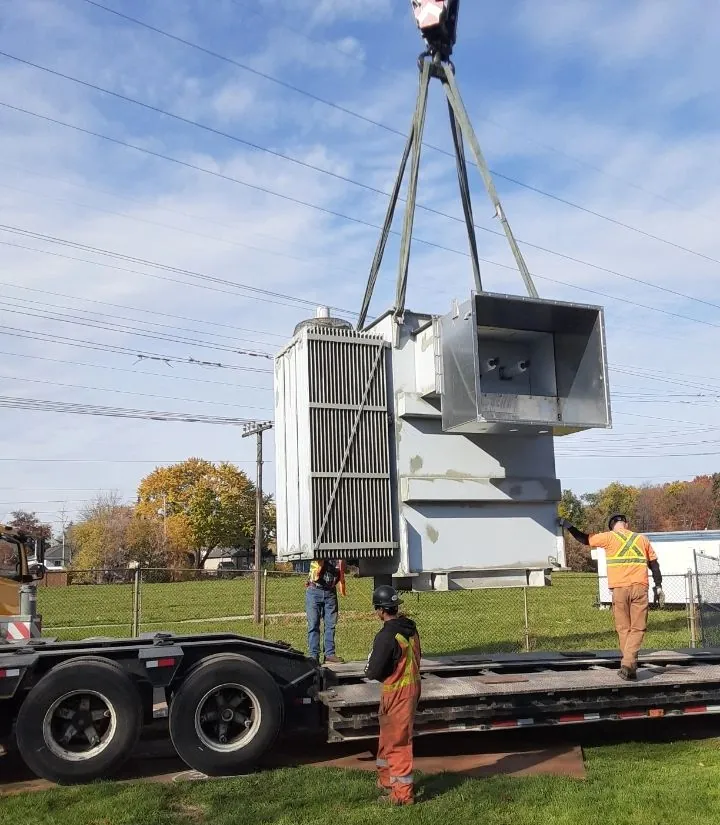
Rigging-Busters provides electrical transformer moving services in Toronto, ON, Canada: transformer rigging, transport and setting for plants, commercial buildings, data centres and electrical contractors in Toronto, the GTA and across Ontario. We move substation and industrial transformers, set them on their pads, and handle the switchgear and generators that stand beside them.
Our part is the lift, the move and the set. Your licensed electricians disconnect and reconnect power, the utility isolates its supply, and the manufacturer looks after oil, dressing and testing. Keeping those roles clear is what keeps a transformer move inside its outage window.
- Industrial work only: plants, data centres, hospitals and commercial electrical rooms. No household moves and no electrical work.
- One crew: survey, rigging, jacking and skidding, transport, setting on the pad and levelling.
- Quick quotes: we reply within 2–4 business hours. Estimates are free.
- Where we work: Toronto, ON and the surrounding area, plus transformer jobs across Ontario.
Need a rough figure before you send drawings? Our Heavy Lifting & Moving Calculator gives a quick price range.
or give a call +1-647-846-5179
Transformer Moving and Rigging Services in Toronto
A transformer move is more than a truck booking. The unit has to come off its pad or out of its vault without tilting past the manufacturer’s limit, travel blocked and chained, and land on the new pad square to the cable entries and anchor bolts. Electrical transformer rigging is planned around the outage your electrical contractor and the utility have agreed, not the other way round.
Pad-Mount and Dry-Type Transformers for Plants and Buildings
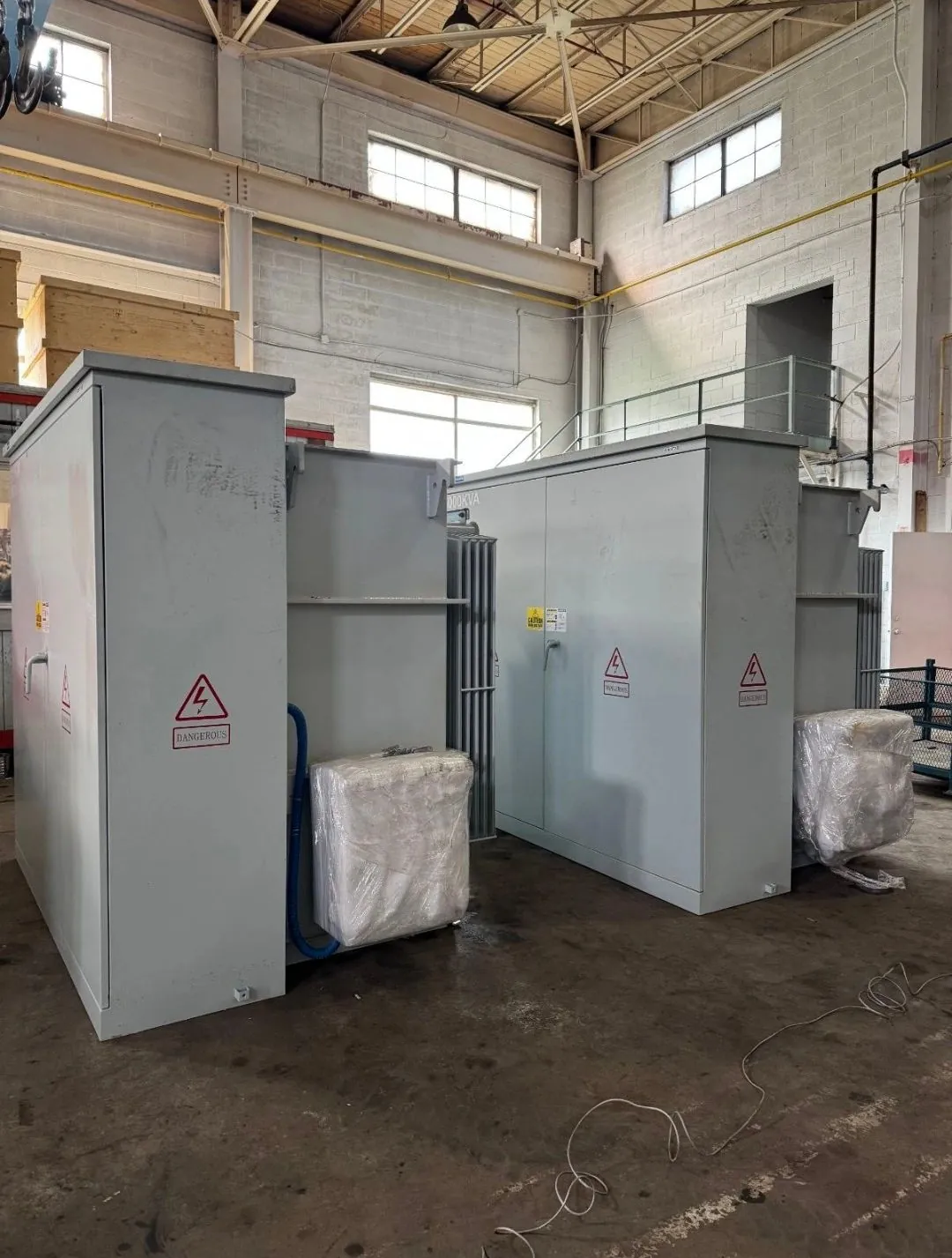
Most units in Toronto plants and commercial buildings are oil-filled pad-mount transformers outdoors or dry-type transformers in electrical rooms. They are lighter than many people expect: one supplier’s published specifications list its three-phase pad-mount units at about 2,000 kg for 500 kVA and about 4,950 kg for 2,500 kVA. Units in that range move on machine skates, hydraulic jacks, a gantry or a forklift, without a heavy-haul rig.
Substation Transformers and Unit Substations
Substation transformers are taller and heavier. Large ones usually travel drained of oil and filled with dry air or nitrogen, with bushings and radiators shipped separately. Where a crane cannot reach the pad, we jack the unit and slide it on skid tracks (jack and slide); where a lift works better, we use our crane or a partner crane. For the largest substation units, send the nameplate weight and the site details first, and we will tell you whether we can take the job and how.
Switchgear, MCCs, Generators and UPS Units
The equipment around a transformer moves with the same crew: switchgear lineups in shipping sections, motor control centres, standby generators and UPS cabinets. That makes us useful for electrical equipment relocation inside a plant as well as for new electrical rooms. In data centres and hospital electrical rooms we work next to live equipment and through tight service corridors; our data centre equipment rigging in Toronto page covers that work.
Electrical Transformer Removal for Replacement or Decommissioning
Our electrical transformer removal services start once your electricians have disconnected the old unit and the owner or manufacturer has dealt with the oil. We take it off the pad, load it and deliver it to the repair shop, buyer or disposal site you choose. For a whole electrical room or a plant closure, see industrial equipment removal in Toronto.
or give a call +1-647-846-5179
How We Move a Transformer Safely
Every job follows the same seven steps, whether it is a dry-type unit going up two floors or a substation transformer crossing the city:
- Nameplate and manufacturer data. Weight, kVA, oil-filled or dry-type, lifting lugs, jacking pads, centre of gravity and tilt limit.
- Site survey. The route from the old pad to the truck and from the truck to the new one: doors, vault hatches, slab and floor loads, overhead lines, and where a crane or boom truck could stand.
- Isolation. The utility isolates its supply where needed, and your licensed electricians lock out, disconnect and confirm the unit is safe to handle.
- Preparation. Radiators, bushings, fans and oil are handled by the manufacturer or your contractor as the manufacturer requires. An impact recorder goes on when the manufacturer asks for one.
- Rigging. We lift only from the tank lifting lugs with spreader beams, jack only at the marked jacking pads, and move the unit on skates, a hydraulic gantry or skid tracks.
- Transport. Blocked and chained on a float or lowboy trailer, with City of Toronto and MTO permits and escorts arranged when the load is oversize.
- Setting. We set the unit on the new pad or in the vault, square it to the cable entries and anchor points, level it, and hand over to your electricians and the manufacturer for reconnection and tests.
Who Does What: Riggers, Electricians, the Manufacturer and the Utility
- Our crew: survey, rigging plan, jacking, skidding, lifting, transport, setting and levelling.
- Your licensed electrical contractor: lockout, disconnection, reconnection and grounding. In Ontario, electrical work for hire must be done by a Licensed Electrical Contractor (O. Reg. 570/05).
- The utility: isolation on its side of the service and any work on its own equipment. Toronto Hydro moves its own assets through a service relocation request, using its crews or a contractor from its approved list, and says a representative follows up within 10 business days.
- The manufacturer’s field service: oil draining and filling, dressing, dry-out and the tests before the unit is energized.
- Your civil contractor: the new pad or foundation, built to the manufacturer’s drawing.
Planning a commercial or industrial electrical transformer installation in Ontario? Bring us in when the electrical contractor fixes the outage date. The rigging plan depends on the same dates and drawings, so a late call can cost you the outage slot.
Equipment Our Crew Uses
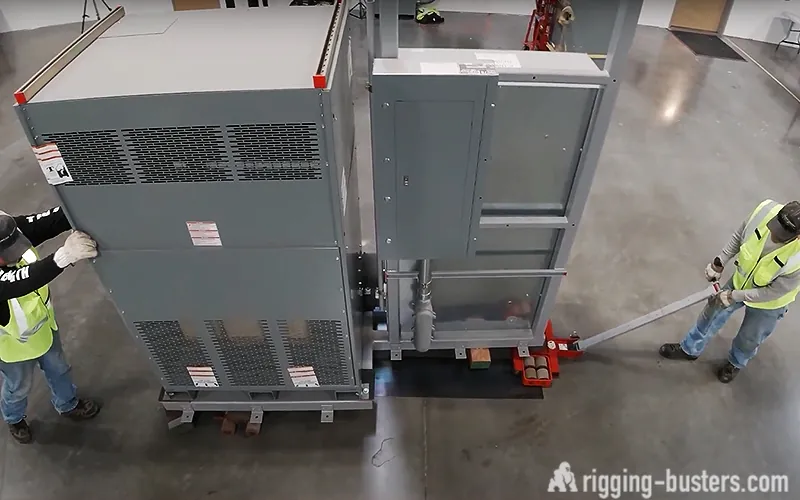
Hydraulic jacks and timber cribbing, machine skates, jack-and-roll and skid tracks for jack-and-slide moves, a hydraulic gantry where there is headroom, forklifts for smaller dry-type units, and our crane or a partner crane for lifts over walls, onto rooftops or into substation yards. For lifts that need a crane on its own, see crane and hoisting services in Toronto.
Vaults, Electrical Rooms and Rooftops
Many downtown Toronto buildings keep their transformers in basement electrical rooms or vaults with no room for a crane hook (units the utility owns are moved by the utility). There we jack the unit, slide or roll it into place and set it with low-profile jacks. Rooftop units need a crane, and a crane or boom truck hoisting from the street needs a City of Toronto Street Occupation Permit, which is obtained in person and paid for when it is issued.
or give a call +1-647-846-5179
Transformer Transport and Permits in Toronto
Height is where transformer loads usually get caught: a tall unit on a lowboy can cross the City’s permit line long before it gets near the weight limit. The City of Toronto requires a single-trip oversize load permit when the truck and load meet or exceed 4.15 m in height, 2.59 m in width, 21.33 m in length or 50,000 kg.
- Normal processing takes 7–10 business days, and the City notes that exceptionally large or heavy loads may take longer, so the application goes in as soon as the outage date is fixed.
- The route on the permit has to be scouted 48 hours before the move.
- Pilot vehicle escorts are required from 4.15 m high, 3.7 m wide, 24.5 m long or 63,500 kg.
- Excess loads are not allowed on the Don Valley Parkway, Black Creek Drive, the Allen Expressway, the elevated section of Lake Shore Boulevard West between Rees Street and Dan Leckie Way, or the Gardiner Expressway from the Humber River east.
- Provincial highways such as the 401, 427, 400 and 404 need an MTO oversize/overweight permit; apply at least 5 business days ahead.
We arrange the permits and escorts. What we need from you is the date range your outage allows, so the permit, the crew and the electricians line up on the same day.
Electrical Transformer Transportation Across Ontario and the US
Transformer transportation between Toronto and manufacturers, repair shops or your other sites runs on float or lowboy trailers, and we handle cross-border transport for units shipped to or from the US. For a new unit, transformer delivery to your pad, unloading and setting can be one job for one crew. Short-term storage between removal and reinstallation can be arranged.
Transformers travel on their own base, blocked and chained, so a move inside Toronto rarely needs custom crating. The tiedown rules that apply to a transformer on the road are set out in machinery transport in Ontario. If your project also calls for custom crating services in Toronto for export, mention it in your request and we will tell you what we can cover.
Transformer Moving Cost in Toronto: What Affects the Price
We price the move, not the transformer. The quote depends on:
- The unit: weight, size and kVA from the nameplate, and whether it is oil-filled or dry-type.
- Access at both ends: pad, vault, electrical room or roof; doors, ramps, floor loads and the distance to the truck.
- The lifting method: skates and jacks, a hydraulic gantry, jack and slide, or a crane lift that needs a Street Occupation Permit.
- Distance and permits: City of Toronto and MTO permits, escorts and the length of the route.
- Timing: outage windows, night or weekend work, and how many units move in one mobilization.
- Manufacturer requirements: impact recorders, tilt limits and accessories that travel separately.
Questions such as what a 1500 kVA transformer costs belong with a supplier; we quote the rigging and transport. Estimates are free, and quotes come back within 2–4 business hours. For a first range, try the Heavy Lifting and Moving Calculator. Before you book any rigger, ask how the transformer is covered while it is lifted and hauled; our guide to riggers liability coverage explains what that insurance usually includes.
or give a call +1-647-846-5179
Why Toronto Sites Hire Us for Transformer Moves
Transformer work around Toronto comes from plant upgrades, new electrical rooms in commercial buildings, data centre build-outs and utility station projects. Two public examples, named as context and not as our clients: Microsoft says equipment installation at its Vaughan data centre continues through early 2028, and Hydro One lists the Bridgman Transmission Station in Toronto and Power Downtown Toronto among its current projects.
What these jobs share is a fixed outage and several trades on one pad. As industrial transformer movers, we fit into that schedule: one crew from survey to set, permits handled, and a clear line between our work and the electrical work.
A Good Fit
- Plant and building transformers, unit substations, switchgear, generators and UPS units that need rigging, moving and setting.
- Electrical contractors and manufacturers who want the lift and set done to their outage window.
- Substation transformers that our jack-and-slide, gantry and crane methods can reach.
- Removals for replacement or decommissioning, and moves between your sites in Toronto, the GTA and the rest of Ontario.
- Insured: liability and workers’ compensation insurance (WSIB in Ontario), with a certificate of insurance on request.
Not a Fit
- Transformer rental or mobile substations: a rental supplier can help.
- Transformer repairs, rewinding, oil testing or maintenance: that is work for a transformer service shop, though we can move the unit to and from the shop.
- Electrical installation and terminations: your licensed electrical contractor.
- The hydro transformer on a home or property: it belongs to the utility, so ask Toronto Hydro for a relocation.
- Buying a transformer or the price of a unit: ask a manufacturer or supplier.
- Household moves of any kind.
If you only need a rigging company in Toronto for other plant equipment, see industrial rigging services in Toronto; to move production machines, see our machinery movers in Toronto.
or give a call +1-647-846-5179
Areas We Cover: Toronto, the GTA and Ontario
In Toronto we work across the employment areas and the denser commercial districts: Etobicoke and Rexdale, North York and Downsview, Scarborough, Leaside, the Port Lands and the downtown core. Around the city we cover Mississauga, Brampton, Vaughan, Markham, Richmond Hill, Oakville, Pickering, Ajax, Oshawa, Barrie and the other cities in the table below.
Outside Toronto, each regional or municipal road authority on the route issues its own permit for its roads, and we apply to each one. Nearby transformer page: transformer moving in Hamilton. For southwestern Ontario, see transformer rigging in London and St. Thomas.
Key Cities We Serve Around Toronto
| City | Province | Country |
|---|---|---|
| Toronto | Ontario | Canada |
| Mississauga | Ontario | Canada |
| Milton | Ontario | Canada |
| Vaughan | Ontario | Canada |
| Markham | Ontario | Canada |
| Richmond Hill | Ontario | Canada |
| Brampton | Ontario | Canada |
| Bolton | Ontario | Canada |
| King City | Ontario | Canada |
| Whitchurch-Stouffville | Ontario | Canada |
| Oakville | Ontario | Canada |
| Burlington | Ontario | Canada |
| Whitby | Ontario | Canada |
| Ajax | Ontario | Canada |
| Pickering | Ontario | Canada |
| Newmarket | Ontario | Canada |
| Aurora | Ontario | Canada |
| Oshawa | Ontario | Canada |
| Georgetown | Ontario | Canada |
| Halton Hills | Ontario | Canada |
or give a call +1-647-846-5179
Have These Ready for an Exact Transformer Moving Quote
- A photo of the nameplate: kVA, weight, oil-filled or dry-type, and the manufacturer.
- Manufacturer drawings, or the lifting and jacking points, if you have them.
- Both addresses and the access at each end: pad, vault, electrical room or roof; doors, ramps and floor loads.
- Photos or a short video of the path between the unit and the truck.
- Your outage window or target date, and the name of your electrical contractor.
- Site rules: contractor prequalification, lift plan or permit requirements.
Send them through our quote request form or call us; we reply within 2–4 business hours.
Other Services in Toronto
See all our services in Toronto, including crane and hoisting for lifts that need a crane on their own.
For heavy equipment moving services beyond electrical gear, you also might be interested in the following services within the area:
- Heavy Equipment & Machinery Movers in Toronto, ON
- Heavy & Industrial Rigging Services in Toronto, ON
- Factory & Plant Relocation Services in Toronto, ON
- Lab & Medical Equipment Movers in Toronto, ON
- Forklift Moving Service in Toronto, ON
- CNC Machine Movers in Toronto, ON
- Printing Press Movers in Toronto, ON
- Heavy Equipment Loading & Unloading in Toronto, ON
- Millwright Services & Machinery Installation in Toronto, ON
- Robotics Equipment Moving in Toronto, ON
- Solar Manufacturing Equipment Moving in Toronto, ON
Location of our sales office:
120 Eglinton Ave E, Toronto, ON M4P 1E2, Canada 👇
Transformer Moving in Toronto: FAQ
It depends on the unit and the route: weight and kVA, oil-filled or dry-type, access at both ends, the lifting method, distance, City of Toronto or MTO permits, and whether the work falls in an after-hours outage. We price the rigging and transport, not the transformer. Estimates are free, quotes come back within 2–4 business hours, and the Heavy Lifting and Moving Calculator gives a first range.
A move inside one Toronto site often fits a single shift once the unit is disconnected. Moves across the city take longer to plan than to do: an oversize load needs a City of Toronto permit, which normally takes 7–10 business days, plus a route check 48 hours before the move. The outage date agreed by your electrical contractor and the utility usually sets the timeline.
No electrical work. We rig, move and set the transformer on its pad or in its room. Disconnection, reconnection and grounding are done by your electricians; in Ontario, electrical work for hire requires a Licensed Electrical Contractor under O. Reg. 570/05. The manufacturer handles oil, dressing and tests, and the utility isolates its supply. We plan the lift around their schedule.
Often, because transformers are tall. The City of Toronto requires a single-trip oversize load permit once the truck and load reach 4.15 m high, 2.59 m wide, 21.33 m long or 50,000 kg, and excess loads cannot use the Don Valley Parkway, the Gardiner east of the Humber or the other restricted expressways. Provincial highways need an MTO permit. We apply for both.
No. A hydro transformer that belongs to the utility is moved only by the utility or a contractor it approves. In Toronto, you submit a service relocation request to Toronto Hydro, which designs and builds the work itself or lets you hire a contractor from its approved list under a Coordination Agreement. We move the transformers that you own, such as units in your plant, substation or electrical room.
No. For transformer rental or a mobile substation, contact a rental supplier. Transformer repairs, rewinding, oil testing and maintenance are done by transformer service shops and the manufacturer’s field service. What we can do is move the unit: take it off the pad, haul it to the repair shop, bring it back and set it again, so your electricians can reconnect it.
Plant and building transformers are routine work for us: pad-mount and dry-type units, unit substations and switchgear lineups. Many weigh only a few tonnes. Substation transformers we move by jack and slide, gantry or crane. For the largest units, send the nameplate weight and a photo of the site, and we will confirm whether and how we can move it.
We start from the manufacturer data: weight, centre of gravity, lifting lugs, jacking pads and tilt limit. Lifts use only the tank lugs with spreader beams, jacking happens only at the marked pads, and the unit travels blocked and chained, with an impact recorder when the manufacturer asks. Your electricians isolate and disconnect it first and reconnect it after we set and level it.
Yes. Switchgear lineups, motor control centres, standby generators and UPS cabinets often move in the same job as the transformer, especially in data centres and hospital electrical rooms. The same crew rigs, moves and sets them, and your electricians make the connections. For data centre projects, see our data centre equipment rigging in Toronto page.
Yes. We cover the GTA: setting a new unit for a transformer installation in Markham or Vaughan, plant moves in Mississauga and Brampton, and sites in Oakville, Richmond Hill, Pickering and Ajax. Outside Toronto, each regional or municipal road authority on the route issues its own permit. For southwestern Ontario, see our transformer rigging in London and St. Thomas page.