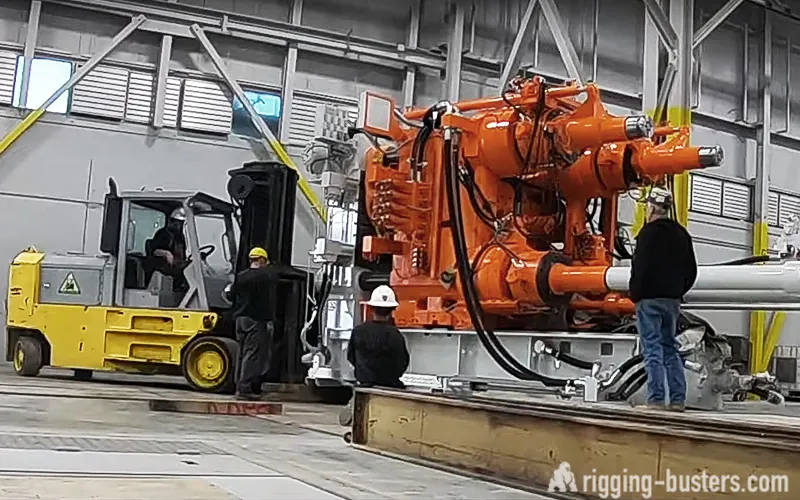
Rigging-Busters moves and rigs solar manufacturing equipment for plants in Toronto and across the Greater Toronto Area (GTA): panel assembly and lamination lines, glass processing and test equipment, and the automation that links them. Our machinery movers and riggers plan the move, rig and protect each machine, transport it, and set it in place and level at the new location.
We move the machines that make solar panels and solar glass, from a single laminator to a full module line or new equipment arriving in crates. Shipping finished panels and installing them on roofs or solar farms are jobs for freight carriers and solar installers.
- Industrial only: solar, BIPV and electronics production equipment; no panel delivery or installation.
- One crew for the move: rigging, transport, set-in-place, levelling and millwright installation.
- Fast answers: quotes within 2–4 business hours.
- Minimum job: 3,500 CAD. Most industrial jobs cost more, and your written quote shows the full price.
- Coverage: Toronto, the GTA and southern Ontario (see the areas we cover).
- Insured: liability and workers’ compensation insurance (WSIB in Ontario), with a certificate of insurance on request.
Budgeting a line move? Our Heavy Lifting & Moving Calculator returns an instant price range.
or give a call +1-647-846-5179
How We Move a Solar Panel Production Line in Toronto
Solar panel production line relocation comes down to sequence and protection: the line only restarts when every machine is back on its marks and the OEM has recommissioned it. Our steps:
- Line survey: the layout drawing, each machine’s make, model, weight and footprint, and the route out of the building.
- Move plan: sequence, shutdown window and who does what, agreed with your engineering team and the line OEM.
- Disconnects: your licensed electricians isolate power, and your team bleeds compressed air and vacuum lines and drains cooling water.
- Protection: moving parts are locked as the OEM specifies, and sensitive heads, lamps and cameras are removed or crated.
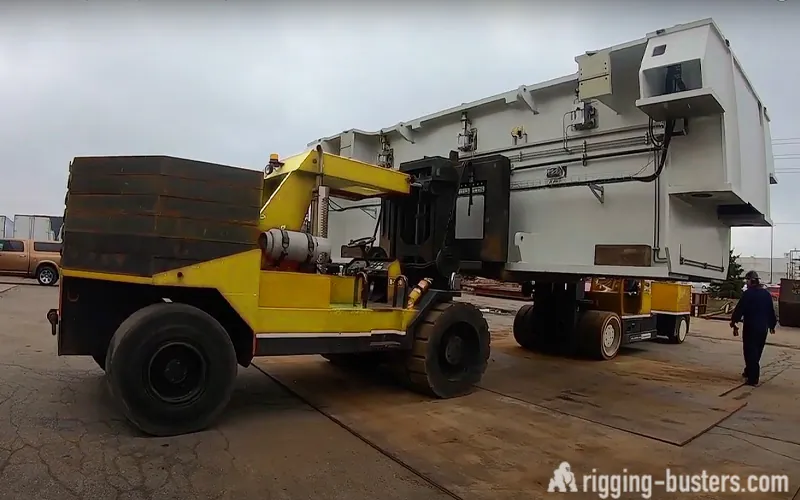
- Rigging and skidding: each machine is lifted at its rated points and moved on skates, a hydraulic gantry or a forklift.
- Transport: machines ride blocked and strapped on trailers matched to each load, with permits for any oversize piece.
- Set-in-place: each machine lands on the new layout marks and is levelled to the OEM’s tolerance, ready for reconnection and recommissioning.
Laminators, Stringers and Test Stations
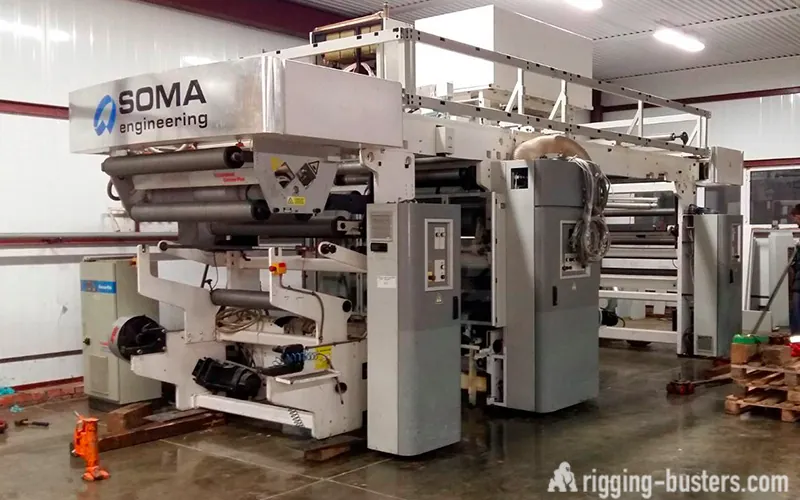
- Laminators: the heated platen must stay flat and the vacuum membrane undamaged, so the lid is secured and the frame is lifted only at its rated points. Multi-stage laminators move as separate units.
- Tabber-stringers and layup robots: heads and cameras are locked or removed as the OEM specifies. Robot cells follow the steps on our robot cell relocation in Toronto page.
- Flash testers and EL testers: lamps, optics and electronics travel upright and padded, and the OEM recalibrates them after the move.
- Glass washers, cutting tables and framing machines: water is drained, and conveyors are split at their joints and match-marked.
Who Handles What
Your licensed electricians disconnect and reconnect power; in Ontario, electrical work done for hire needs a Licensed Electrical Contractor (O. Reg. 570/05). The line OEM recommissions and calibrates each machine. Our crew does the rigging, transport, set-in-place and levelling, plus millwright work such as rejoining conveyors and anchoring frames.
Permits and Routes for Solar Equipment in the GTA
Single machines usually travel at legal size, but a laminator section or a long conveyor can outgrow the City of Toronto’s limits. Once the truck and its load reach 2.59 m in width, 4.15 m in height, 21.33 m in length or 50 t, the move needs a single-trip oversize load permit, which normally takes 7 to 10 business days to process. Those loads may not use the Don Valley Parkway, Black Creek Drive, the Allen Expressway, elevated Lake Shore Boulevard West or the Gardiner east of the Humber. Highway legs need an MTO permit, requested at least 5 business days ahead. In Peel, Mississauga issues its own excess load permits for city roads (at least 5 business days), and Brampton’s are reviewed and issued by the Region of Peel.
Solar Manufacturing Equipment We Move
Our crew rigs, relocates and installs:
- Solar panel assembly lines: tabber-stringers, layup and bussing stations
- Lamination systems: single-stage and multi-stage laminators
- Glass processing systems: loaders, washers and cutting tables
- Framing, trimming and junction box stations
- Testing and quality control equipment: flash testers and EL testers
- Automation systems: conveyors, buffers, robots and packing stations
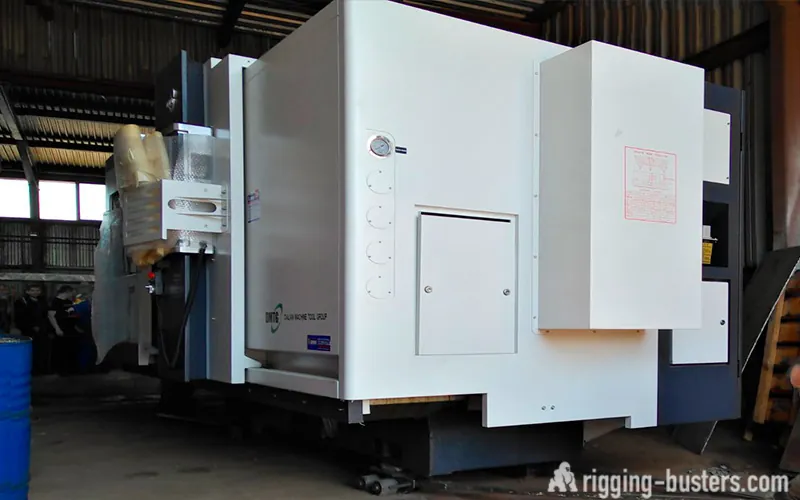
- BIPV equipment for solar cladding and solar glass, including glass-cutting CNC machines
- Inverter and power electronics production equipment
Solar Manufacturing in Toronto and the GTA
Nine in ten of Toronto’s manufacturing and warehousing jobs were in the City’s Employment Areas in 2025, so that is where most solar and electronics plants sit. Solar work in the city includes building-integrated PV: in 2021 a Toronto maker of solar cladding and solar glass opened a factory of more than 100,000 sq ft built around a fully automated panel line (public news, not a client of ours). New lines usually arrive crated from the equipment maker, so an install starts with unloading, uncrating and setting each machine on its marks.
Solar Equipment Moving Cost: What Drives the Price
Each solar equipment move is quoted as a job. The main cost drivers:
- Scope: one machine, a section of the line or the full line
- Heaviest piece: often the laminator, with its size and centre of gravity
- Site access: docks, door heights, aisles and any clean-area rules
- Method: skates, gantry, forklift or a crane lift (crane time is included in your quote)
- Protection: crating for heads, lamps, optics and spare parts
- Distance, permits and timing: shutdown, night and weekend work
Electrical work and OEM recommissioning are quoted by those trades. Ask us to price the rigging, transport and set-in-place together.
Areas We Cover in Toronto and the GTA
We take solar and electronics equipment moves across Toronto, including Etobicoke, North York and Scarborough, and to plants in Vaughan, Markham, Richmond Hill, Mississauga, Brampton, Oakville, Burlington and Durham Region. Longer moves across southern Ontario are planned the same way. Peel plants can also use our machinery movers in Mississauga and machinery movers in Brampton.
Cities We Serve for Solar Equipment Moves
| City | Province | Country |
|---|---|---|
| Toronto | Ontario | Canada |
| Mississauga | Ontario | Canada |
| Milton | Ontario | Canada |
| Vaughan | Ontario | Canada |
| Markham | Ontario | Canada |
| Richmond Hill | Ontario | Canada |
| Brampton | Ontario | Canada |
| Bolton | Ontario | Canada |
| King City | Ontario | Canada |
| Whitchurch-Stouffville | Ontario | Canada |
| Oakville | Ontario | Canada |
| Burlington | Ontario | Canada |
| Whitby | Ontario | Canada |
| Ajax | Ontario | Canada |
| Pickering | Ontario | Canada |
| Newmarket | Ontario | Canada |
| Aurora | Ontario | Canada |
| Oshawa | Ontario | Canada |
| Georgetown | Ontario | Canada |
| Halton Hills | Ontario | Canada |
or give a call +1-647-846-5179
Is This the Right Service for Your Solar Equipment?
A good fit: module lines, single laminators or testers, new lines arriving in crates, BIPV and solar glass equipment, and plant moves or closures.
Not a fit: solar transport of finished panels to installers or job sites, rooftop and solar farm installation, solar farm construction machinery, equipment sales or repair, and solar jobs.
Closing a line or a whole plant? For machinery removal in Toronto, see plant closure and auction removal in Toronto. For heavy equipment moving services in Toronto beyond solar lines, see our machinery movers in Toronto.
Have These Ready for an Exact Quote
Attach these to your quote request for a faster, firmer price:
- Machine list: make, model, weight and footprint of each machine
- Line layout at the old and the new site
- Both addresses, with docks, door heights and floor details
- Shutdown window and when the OEM can attend
- Crating needs for heads, lamps and optics
- Photos of each machine and the route out
Other Services in Toronto
More Rigging-Busters services in Toronto (or browse all our services in Toronto):
- Machinery & Heavy Equipment Movers in Toronto
- Robotics Equipment Moving & Robot Cell Relocation in Toronto, ON
- Factory & Plant Relocation Services in Toronto, ON
- Heavy & Industrial Rigging Services in Toronto, ON
- Crane Rigging & Heavy Lifting for Machinery in Toronto, ON
- Plant Closure & Auction Removal in Toronto, ON
- CNC Machine Movers in Toronto, ON
- Lab & Medical Equipment Movers in Toronto, ON
- Forklift Moving Service in Toronto, ON
- Electrical Transformer Moving Services in Toronto, ON
- Printing Press Movers in Toronto, ON
- Heavy Equipment Loading & Unloading in Toronto, ON
- Data Centre Equipment Rigging in Toronto, ON
- Millwright Services & Machinery Installation in Toronto, ON
Location of our sales office:
120 Eglinton Ave E, Toronto, ON M4P 1E2, Canada
Solar Manufacturing Equipment Moving: FAQ
Yes, once they are isolated. Your licensed electricians disconnect and lock out the line first; in Ontario, electrical work done for hire needs a Licensed Electrical Contractor under Ontario Regulation 570/05. We then rig each machine at its rated lifting points, crate sensitive heads, lamps and optics, and secure everything on the trailer. The OEM recommissions the equipment after we set it in place.
A laminator is usually the heaviest machine on a module line, and its heated platen must stay flat. We secure the lid, protect the vacuum membrane and lift the frame only at its rated points, then move it on skates, a gantry or a forklift. Multi-stage laminators travel as separate units, and each one is levelled to the OEM’s tolerance at the new site.
Yes. Solar panel production line relocation is planned as one sequence with your engineering team and the line OEM: survey, disconnects, protection, rigging, transport and set-in-place on the new layout marks. We move lines between plants in Etobicoke, North York or Scarborough, out to Vaughan, Mississauga or Brampton, or across southern Ontario, scheduled around your shutdown window.
Yes, on the mechanical side. We unload the crates, uncrate each machine, move it into the plant on skates or a forklift, and set it in place and level it on your layout marks. Your licensed electricians make the power connections, and the equipment maker commissions and calibrates the line. We can also rejoin conveyors and anchor frames as millwright work.
Sometimes. The City of Toronto requires a single-trip oversize load permit when the truck and its load reach 2.59 m in width, 4.15 m in height, 21.33 m in length or 50 t, and processing normally takes 7 to 10 business days. Single machines usually travel at legal size; a laminator section or a long conveyor may not. Highway legs need an MTO permit too.
All of Toronto, including the Employment Areas in Etobicoke, North York and Scarborough, plus Vaughan, Markham, Richmond Hill, Mississauga, Brampton, Oakville, Burlington and Durham Region. In Peel, oversize loads need local permits: Mississauga issues its own for city roads, and in Brampton the Region of Peel reviews and issues them. Longer moves across southern Ontario are planned the same way.
Each move is quoted as a job. The price depends on the scope (one machine or the whole line), the weight of the heaviest piece, access at both sites, the lifting method, crating, distance and permits, and shutdown or weekend timing. Electrical and OEM work are quoted by those trades. Our Heavy Lifting and Moving Calculator gives a rough range for budgeting.
No. Solar transport of finished panels to installers or job sites is freight work, and rooftop or solar farm installation is done by solar installers. Rigging-Busters moves the machines that make panels and solar glass: laminators, stringers, testers, glass processing and framing equipment, and the automation between them, in Toronto, the GTA and southern Ontario.