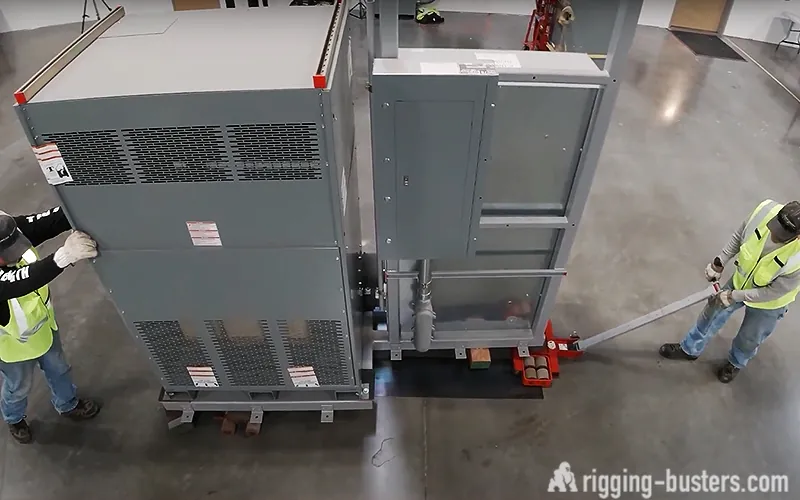
When a Hamilton hospital, cancer centre or imaging clinic replaces or relocates an MRI, CT scanner, linear accelerator (LINAC) or X-ray system, two teams share the work. The manufacturer’s (OEM’s) engineers ramp down, de-install, re-install and calibrate the system. Our riggers handle the heavy, physical part: the route survey, rigging out, padded transport and setting the new unit in place.
Rigging-Busters provides MRI rigging and hospital equipment rigging in Hamilton, Burlington, Stoney Creek, Ancaster and the Niagara Region. We also move the heavy plant behind the clinical floors, such as emergency generators, chillers, sterilizers, transformers and switchgear, for facilities teams and their mechanical and electrical contractors.
- Hospital and industrial equipment only: imaging rooms, hospital plant and heavy lab equipment; no hospital beds, home medical equipment or office moves.
- Clear roles: we rig, move and set in place; your OEM handles the system itself; your licensed electricians disconnect and reconnect power.
- Fast quotes: replies within 2–4 business hours.
- Service area: Hamilton, Burlington and Halton Region, Brantford, Grimsby, St. Catharines and Niagara Falls.
Budgeting for a generator, a chiller or a scanner rig-out? Our Heavy Lifting & Moving Calculator gives a rough range; imaging rooms are always priced from the site details.
or give a call +1-647-846-5179
Medical equipment we rig, move and set in place
As hospital heavy equipment movers, we take the items that are too heavy, too large or too delicate for a facilities crew with a pallet jack. On imaging projects we work beside the manufacturer’s install team; on plant projects we work for your contractor or facilities manager.
- MRI magnets and the cabinets and patient tables that travel with them, rigged out and in alongside the OEM’s engineers
- CT and PET-CT gantries, tables and power units
- Linear accelerators (LINAC) and radiation-oncology equipment, into and out of treatment vaults
- X-ray, fluoroscopy, C-arm and cath-lab systems, mammography and DEXA units
- Steam sterilizers and autoclaves for central sterile (CSSD), plus washer-disinfectors
- Emergency generators, chillers, transformers and switchgear in the hospital utility plant
- Heavy lab and research equipment, such as environmental chambers and emptied freezers
MRI, CT, PET-CT, LINAC and Cath-Lab Rooms: Who Does What
An imaging room change brings several trades onto the same job. Knowing who does what keeps the schedule tight and the quotes comparable:
- Your OEM’s engineers ramp the MRI magnet down, disconnect and de-install the system, then re-install, calibrate and run the acceptance tests.
- Our riggers survey the route, protect floors and door frames, rig the magnet, gantry or LINAC out, secure it for transport, and set the new unit on its marks in the room.
- Your licensed electricians and mechanical trades isolate and reconnect power, chilled water and other services. In Ontario, electrical work for hire needs a Licensed Electrical Contractor (O. Reg. 570/05).
- Your project or facilities manager books the shutdown, the hospital’s contractor approvals and any wall opening or roof hatch.
Many Ontario hospitals buy imaging through vendor-managed programs, so the vendor’s project manager often chooses the rigger. If that is you, send the site plan and delivery weights and we will price the rigging scope only. For imaging projects elsewhere in the province, see MRI and medical imaging rigging across Ontario.
Hospital Plant: Generators, Chillers, Sterilizers, Transformers
Hospitals run on heavy plant that has to be replaced without interrupting care. We rig and set in place emergency diesel generators and their enclosures, chillers, steam sterilizers and autoclaves, transformers, switchgear and UPS cabinets, usually as the rigging subcontractor to your mechanical or electrical contractor. When a unit has to reach a roof or a plant-room opening, the lift is done with our crane or a partner crane.
For the electrical side, see electrical transformer moving in Hamilton; for generators and UPS systems in critical facilities, see data centre equipment rigging in Toronto.
Old Scanners Out: Removal for Resale or Disposal
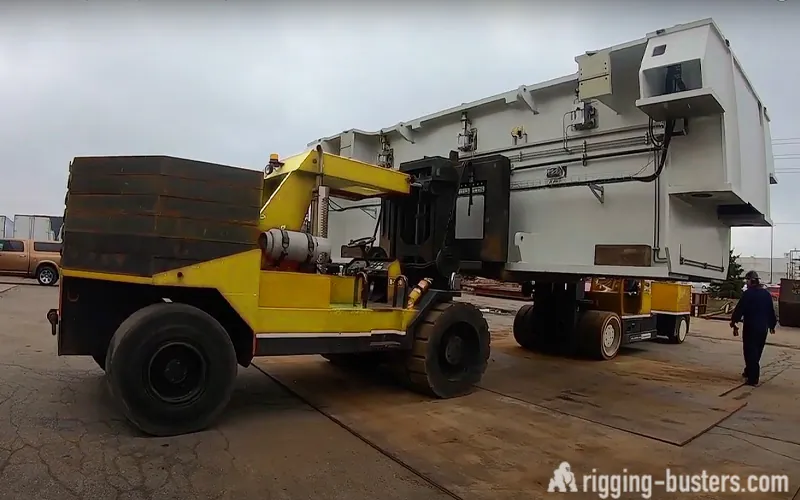
When a scanner is replaced, the old one usually has to leave the building in the same shutdown window that brings the new one in. Our medical equipment removal work covers the heavy part: we rig out the de-installed MRI, CT or X-ray system, pad or crate it as the buyer or reseller asks, and load it for transport, including cross-border delivery to US buyers. If the new room is not ready, we can store equipment until it is. Clearing a whole department or clinic? See equipment decommissioning and removal in Hamilton.
Why Hamilton healthcare facilities choose us
- A clear scope: we rig, move and set in place, and leave ramp-down, calibration and acceptance testing to your OEM.
- Methods for tight hospital routes: machinery skates, hydraulic gantries, jack-and-roll and floor protection, with crane lifts by our crane or a partner crane.
- Your site rules first: we work to your hospital’s contractor and infection-control requirements; send them with the quote request.
- Planned around patient care: night and weekend moves keep corridors and elevators free during clinic hours.
- One crew from truck to room: rigging, transport, set-in-place and levelling, plus storage until the room is ready.
- Fast answers: quote replies within 2–4 business hours.
Serving Hamilton’s hospitals, cancer centres and imaging clinics
Hamilton keeps adding imaging capacity. The MRI installed at Hamilton General Hospital in October 2024 became the fifth in the Hamilton Health Sciences network, and the new South Niagara Hospital in Niagara Falls is on track to open in 2028, with its equipment moved in ahead of opening. We name these as public projects, not as clients.
We take work from hospitals, cancer centres, private imaging and diagnostic clinics, imaging resellers and the contractors who build and renovate them, across Hamilton, Burlington, Stoney Creek, Ancaster, Dundas, Grimsby, St. Catharines and Niagara Falls. Whether you’re commissioning a new suite or replacing aging imaging equipment, we plan around your clinical operations.
Moving lab, clinic or research equipment rather than an imaging room? See our lab and medical equipment movers in Hamilton.
or give a call +1-647-846-5179
Our medical rigging process for MRI installation and removal
Every imaging or hospital plant move we take follows these steps:
- Survey and plan: we walk the route from the truck to the room, checking doors, corridors, elevators, floor loading, ramps and any wall opening or roof hatch against the OEM’s site plan and delivery weights.
- Permits and booking: transport permits, a crane when the route needs one, and a move window agreed with your facilities team and the OEM.
- OEM release: the manufacturer’s engineers ramp down the magnet or power down the system and de-install it; your licensed electricians isolate power.
- Rig out: we protect floors and walls, then move the unit on skates, a hydraulic gantry or jack-and-roll, or lift it out through the opening by crane.
- Transport: padded and secured on a trailer matched to the load, or into storage until the room is ready.
- Rig in and set in place: the unit goes onto its marks or anchor points and is levelled where the plan calls for it.
- OEM recommissioning: the manufacturer re-installs, calibrates and runs the acceptance tests before the room returns to service.
Transport and Permits in Hamilton and Niagara
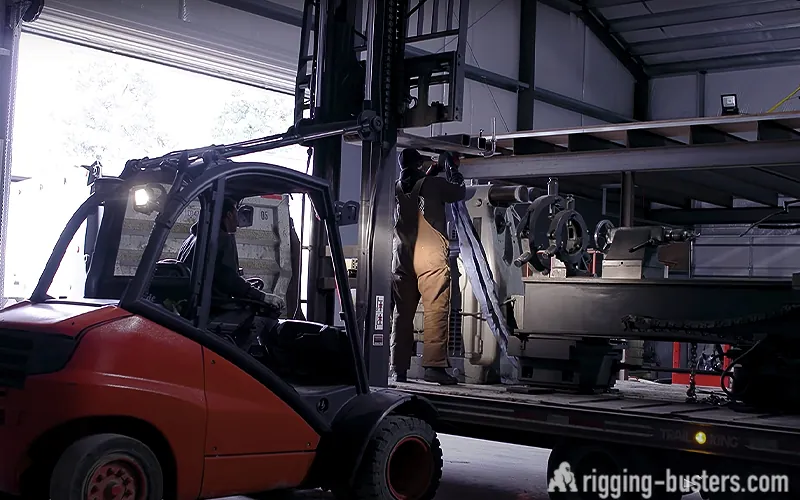
Oversize loads on the QEW and Highway 403 need an MTO oversize/overweight permit, and Ontario asks carriers to apply at least 5 business days before the trip. On City of Hamilton roads, including the Lincoln M. Alexander and Red Hill Valley parkways, an oversized or overweight truck needs a City Oversize Permit; standard oversize applications can take up to 5 business days, and overweight applications may need extra review. Roads in the Niagara Region and its towns are permitted separately, so we confirm the route with each road authority before booking the move.
Estimates are free. Tell us the equipment, the locations and your timeline, and we will reply within 2–4 business hours. For time-critical moves, call us directly.
MRI and Hospital Equipment Rigging Cost in Hamilton: What Affects the Price
Pricing for imaging and hospital rigging is set per job, from the site details. These factors move the price most:
- What is moving: magnet type and weight (open MRI magnets are generally heavier than closed-bore magnets), a CT gantry, a LINAC, or a generator or chiller.
- Where the room is: a ground floor beside a loading area, or an upper floor or basement reached through corridors, elevators or a wall opening.
- Access work: a roof hatch or knock-out panel, temporary openings, floor protection and shoring along the route.
- Crane time: for upper-floor openings and rooftop plant (crane time is included in your quote).
- Timing: nights, weekends and short shutdown windows that keep clinical areas running.
- Transport and storage: distance, permits and storage until the new room is ready.
For a rough range on plant equipment, try the Heavy Lifting & Moving Calculator. Asking which firms provide hospital equipment installation in Ontario, and how they compare on pricing and service? Compare like with like: the same scope (rigging only, or rigging with transport and storage), the same access plan and the same schedule, with the OEM’s tasks listed separately.
Good Fit and Not a Fit for Hospital Rigging
A good fit: MRI, CT, PET-CT, LINAC, cath-lab and X-ray rigging with your OEM; rig-outs of old scanners for resale or disposal; hospital generators, chillers, sterilizers, transformers and switchgear; heavy lab equipment; storage between rig-out and rig-in.
Not a fit: hospital beds, home medical equipment and mobility aids; medical-office or clinic furniture moves; patient transport and medical courier work; equipment sales, rental or service; MRI shielding or room construction; ramp-down, calibration and acceptance testing, which stay with your OEM.
Have These Ready for an Exact Quote
Imaging and plant jobs are priced from the route, so these details decide how fast and how exact your quote is. Send them with your quote request:
- Equipment: the modality or plant item, make and model, and the OEM’s weights and dimensions (the site plan helps)
- Both addresses and floors: the room, the delivery door or loading area, and any elevator on the way
- Route photos: doors, corridors, ramps, elevator doors and any wall opening or roof hatch
- Crane access: where a crane could stand, if the unit goes through an upper-floor opening or onto a roof
- Dates and windows: the OEM’s ramp-down and install dates, and your night or weekend options
- Who does what: who de-installs and re-installs, and your hospital’s contractor and infection-control requirements
Other Services in Hamilton
More from our Hamilton riggers, or browse all our services in Hamilton:
- Heavy Equipment & Machinery Movers in Hamilton
- Heavy & Industrial Rigging Services in Hamilton
- Factory & Plant Relocation Services in Hamilton
- Lab & Medical Equipment Movers in Hamilton
- Forklift Moving Service in Hamilton
- CNC Machine Movers in Hamilton
- Printing Press Movers in Hamilton
- Electrical Transformer Moving Services in Hamilton
- Equipment Decommissioning & Removal in Hamilton
- MRI & Medical Imaging Equipment Rigging in Ontario
Moving medical equipment in British Columbia? See medical equipment movers in Vancouver.
Hospital and MRI Equipment Rigging in Hamilton: FAQ
It depends on the system and the route, so every imaging move is quoted from the site details. Magnet type and weight, the floor the room is on, wall openings or a roof hatch, crane time, night work and storage drive the price. Try our Heavy Lifting and Moving Calculator for plant items, and send the OEM site plan for an exact quote.
We handle the rigging and transport, not the system work. The manufacturer’s engineers ramp down the MRI magnet, de-install the system and later re-install, calibrate and test it. Our riggers survey the route, rig the unit out, pad and secure it for transport, store it if the room is not ready, and set it in place for the OEM.
Usually, yes. The manufacturer’s engineers normally ramp a superconducting magnet down before de-installation, under a cryogen management plan, because a wrong ramp-down can damage the magnet or cause a quench. Moving a magnet that is still at field is possible in some cases but costly and risky. We plan the rigging around the OEM’s ramp-down date.
By the shortest strong route. Ground-floor rooms are reached through a delivery door, with the magnet on skates or a hydraulic gantry. Upper floors often need a crane lift through a wall opening or roof hatch. At Toronto Western Hospital, magnets of up to 13 tonnes went in through a third-floor wall opening and rolled down a hallway shored from below.
Yes, as the rigging part of the manufacturer’s install. LINAC components are heavy and go into shielded treatment vaults, so the route, floor loading and lifting points are agreed with the OEM’s install team before the move. We rig the components out of the old vault or into the new one and set them where the install team needs them.
Yes. We schedule moves for nights and weekends where needed, keep routes short and protected, and work to your hospital’s contractor rules and infection-control requirements, such as hoarding and clean routes agreed with your facilities team. Send those requirements with the quote request so the crew plan and the price reflect them. We work across Hamilton, Burlington, Stoney Creek, Ancaster and Niagara.
Yes. We rig and set in place emergency generators, chillers, steam sterilizers and autoclaves, transformers and switchgear, usually as the rigging subcontractor to your mechanical or electrical contractor. Units go in on skates, gantries or jack-and-roll, or with our crane or a partner crane for roofs and plant-room openings. Your licensed electricians and mechanical trades disconnect and reconnect the services.
For oversize or overweight loads, yes. On City of Hamilton roads, including the Linc and the Red Hill Valley Parkway, an oversized or overweight truck needs a City Oversize Permit, and standard applications can take up to 5 business days. The QEW and Highway 403 need an MTO permit, applied for at least 5 business days ahead. We arrange both.
No. We rig and move heavy imaging, lab and hospital plant equipment, not hospital beds, mobility aids, home medical equipment or office furniture. A medical supply company or an office mover is the better call for those. For heavier lab and clinic equipment, see our lab and medical equipment movers in Hamilton.