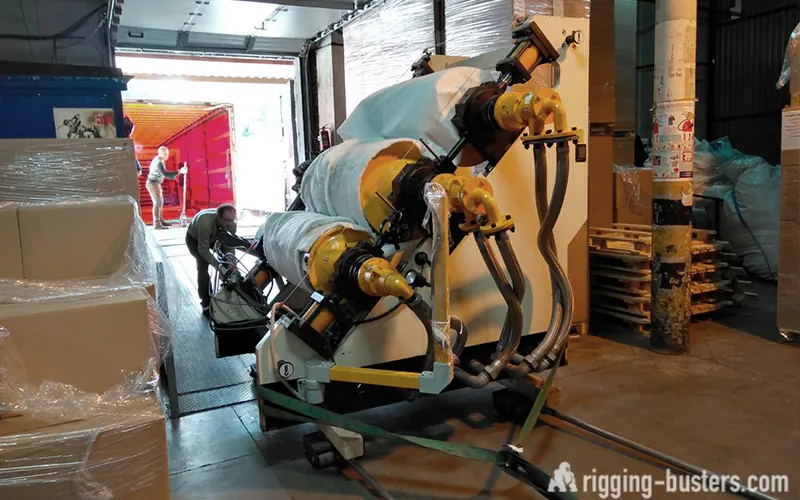
When a Hamilton plant is closing a line, replacing equipment or decommissioning a facility, we handle the industrial plant removal: we coordinate the disconnects, then dismantle, rig out, load and haul the machinery to wherever it goes next.
We are riggers, not a scrap buyer. We don’t buy equipment or scrap and we don’t recycle it ourselves: your auctioneer, buyer or the recycler you choose handles the sale, and our crew gets each machine out of the building safely and on time.
From a single machine to the machinery side of a full plant decommissioning, we cover teardown, rigging out, loading, transport, storage and set-in-place at a new site. Building demolition, asbestos abatement and environmental work stay with licensed specialists.
- Industrial only: machinery, production lines and plant equipment, not junk, furniture or office contents.
- One crew from rig-out to drop-off: dismantling, loading, haul, storage, and set-in-place with levelling at a new site.
- Fast quotes: replies usually within 2–4 working hours once we have all the details, which matters when a removal window is measured in days.
- Minimum job: 3,500 CAD before tax. Most industrial jobs cost more, and your written quote shows the full price.
- Service area: Hamilton, Stoney Creek and Burlington, plus Niagara, Brantford and Haldimand County.
Use our Heavy Lifting and Moving Calculator for a quick, rough price range.
or give a call +1-647-846-5179
Plant Removal, Disposal and Decommissioning Services in Hamilton
Our part of a decommissioning is the machinery. We take equipment apart only as far as it has to come apart, rig it out and haul it away, so the floor is clear for the next tenant, the demolition contractor or your new layout. That covers:
- Industrial equipment decommissioning on the machinery side: teardown to transport size, match-marking and crating
- Machinery removal and rig-out from active or closing plants
- Line removals that clear space for new equipment while the rest of the plant keeps running
- Loading and haul to your new site, your buyer, storage or the recycler you choose
- Storage while a sale closes or a new building gets ready
- Deinstallation, dismantling and a clear floor at the end
- Coordination with your electricians, abatement contractor and auctioneer
What We Remove
Stamping presses, press brakes and shears; CNC machining centres and lathes; injection moulding machines; conveyors and complete production lines; tanks and silos; compressors and generators; platforms and mezzanines; and transformers and switchgear, covered in more detail under transformer moving and removal in Hamilton. Moving a machine to another plant rather than clearing it out? See machinery movers in Hamilton. For a lift or skid only, see industrial rigging services in Hamilton.


or give a call +1-647-846-5179
Plant Closures, Idled Lines and Auction Removals
Most plant removal work around Hamilton starts with one of three events: a closure, an idled line or an auction with a removal deadline. Each sets a different pace.
Clearing a Closing or Idled Plant
A closing plant usually goes through liquidation: an appraiser or auctioneer sells the equipment, and what does not sell goes to a dealer or a scrap yard. We work to that sequence, taking sold machines out first so docks and aisles stay clear, then clearing the rest by the date the lease or the sale requires.
An idled line is a different job. When Stelco idled the cold mill and coating lines at Hamilton Works from 9 October 2026, it told customers the lines would stay idle for an indefinite period (The Hub, 1 October 2026); we cite it as public news, not as a client. Idled equipment is often kept in place and protected, or only part of it is moved, so the work may be shrink-wrapping machines, moving selected equipment into storage or clearing a single bay while the owner decides.
Removing Machinery You Bought at Auction
Plant auctions around Hamilton give buyers days, not months, to clear their lots, and the terms are strict. Two sales this autumn show the pattern:
- Stoney Creek, Dewitt Road: a paper-mill equipment sale of more than 600 lots on 12 November 2026, with every lot out by 27 November, by appointment only. Lots marked CI need a certificate of insurance, removals need written rigger release instructions, and sales with an exclusive rigger carry removal fees (sale terms).
- Kitchener, Victoria Street North: a food-processing plant sale closing on 12 November 2026, with small equipment out by 18 November and large equipment by 4:00 PM on 23 November, weekdays only (sale terms). Food plant buyers can also see food processing equipment movers in Brampton and Mississauga.
Three details in the sale terms decide what a lot really costs you: the removal deadline and site hours; who may rig it, whether one exclusive rigger or any rigger the auctioneer approves after receiving insurance and safety documents; and what must happen to anchors, oils and the floor. Our guide to riggers liability coverage explains what that insurance usually covers. Send us the lot numbers with the terms and you usually get our answer within 2–4 working hours once we have all the details, before you commit to a bid. Buying at a sale elsewhere in Ontario? Our page on removal of auction lots covers each step, from the pre-bid check to set-in-place.
or give a call +1-647-846-5179
Our Disposal and Decommissioning Process: From Shutdown to a Clear Floor
From the first survey to the final handover, every industrial site decommissioning we take on follows the same order, and the first steps belong to the owner and the trades:
- Survey and deadlines: the equipment list with weights, where each machine sits, the sale or closing date and the day the floor must be empty.
- Hazards first: the owner lists the designated substances on site and gives the list to contractors before the project starts (Occupational Health and Safety Act, s. 30), and asbestos that the work may disturb is removed by an abatement contractor before machinery is demolished (O. Reg. 278/05, s. 6).
- Licensed disconnects and lockout: a Licensed Electrical Contractor disconnects power (O. Reg. 570/05), gas, air and water lines are isolated and capped, and each machine is locked out before our crew starts.
- Fluids out: hydraulic oil, coolant and lubricants are drained by whoever the plan or the sale terms assign.
- Dismantle and match-mark: guards, platforms and long frames come apart to transport size, labelled for reassembly when a machine will run again.
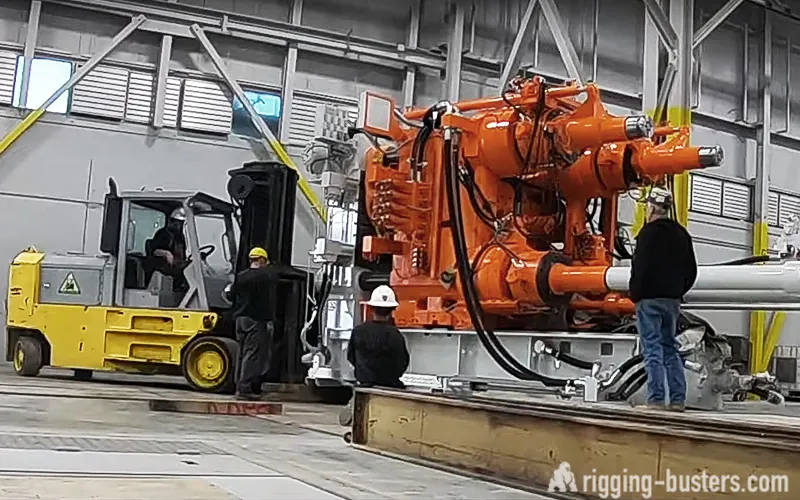
- Rig out: machinery skates, hydraulic gantries and jack-and-roll bring each machine to the dock, and a licensed crane partner lifts the rare piece that needs a crane.
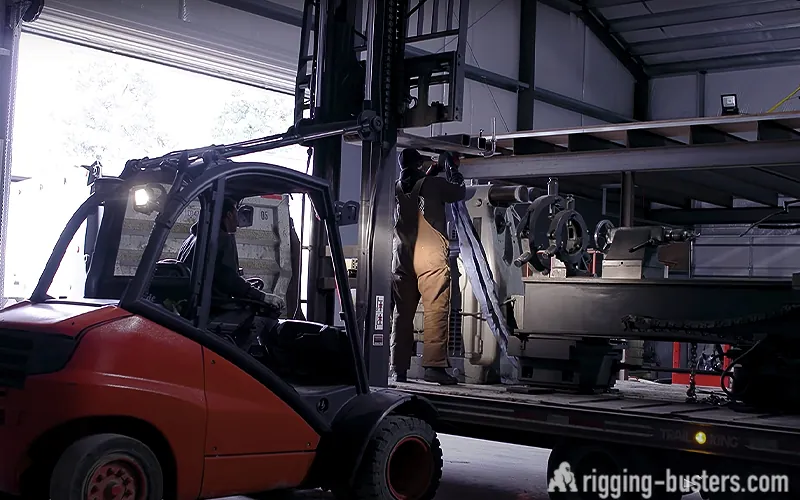
- Load and haul: heavy-capacity lift trucks load trailers matched to each load, with City of Hamilton and MTO permits and escorts for oversize pieces.
- Anchors and floor: anchor bolts cut flush where the lease or the sale terms require it.
- Clear floor: the bay is handed back empty, with our skates, cribbing and rigging gone.
Who Does What: Our Crew, Your Trades, Your Auctioneer and Your Recycler
- Our crew: survey, removal plan, dismantling, rigging, loading, haul, storage and set-in-place at a new site.
- You, the owner: the designated substances list, the deadline and site access.
- Your electricians and other trades: disconnects, lockout and capping of services.
- Abatement and demolition contractors: asbestos and other hazardous materials, and the building itself.
- Your auctioneer, dealer or buyer: the sale, the buyer’s paperwork and any exclusive-rigger arrangement.
- The recycler you choose: weighing and paying for the metal we deliver.
Where Removed Equipment Goes
You decide where each machine goes: to your new site, where we set it in place and level it; into storage until a sale closes; to a buyer’s dock in Ontario or across the border in the United States; or to the recycler you pick. Still weighing auction, dealer or scrap? Our guide to machinery disposal options compares them.
Machinery Transport and Permits in Hamilton
Hauling a large machine out of Hamilton can take two permits. On City roads, an oversized or overweight truck needs a City of Hamilton Oversize Permit and proper liability insurance; standard oversize applications can take up to five business days, and overweight ones longer (City of Hamilton). The 2026 single-trip fee is $174.35 for loads under 70,000 kg, $300 under 120,000 kg and $1,668.25 for a superload. The QEW, Highway 403 and other provincial highways need an MTO oversize/overweight permit, applied for at least five business days ahead. Burlington Street connects the Bayfront industrial area to the QEW.
or give a call +1-647-846-5179
Why Hamilton Facilities Choose Us for Plant Removal
We help Hamilton facilities manage decommissioning projects with a clear plan, careful execution and minimal disruption. One crew plans and runs the removal from the first survey to the last load, so nothing falls between trades.
- Riggers, not demolition or scrap: we lift and move heavy machinery with skates, gantries, jack-and-roll and heavy-capacity lift trucks.
- No stake in the metal: we don’t buy equipment, so where it goes is your call, and any resale or scrap value is paid to you.
- Deadline planning: lease ends, closing dates and auction pickup windows.
- Minimal-disruption scheduling for active facilities, around running lines and shifts.
- Permits arranged: City of Hamilton and MTO oversize permits and escorts.
- Fast answers: quote replies usually within 2–4 working hours once we have all the details, and estimates are free.
- Equipment: jack-and-roll systems for loads up to 600 tons, lift trucks up to 60,000 lb and float trailers for loads up to 50 tons.
- Insured: $5 million in liability insurance, plus workers’ compensation coverage (WSIB in Ontario), with a certificate of insurance on request.
A good fit: plant closures and consolidations, idled lines, line removals before a new installation, auction and liquidation pickups, and machines going to storage, a buyer or a new site.
Not a fit: junk or household removal, free scrap-metal pickup or cash for scrap, building demolition, asbestos or hazardous-waste abatement, office decommissioning services and IT disposal, gym equipment, environmental or nuclear decommissioning, and appraising or buying equipment.
Removal and Decommissioning Cost: What Affects the Price
We price every removal per job, from your equipment list and photos or a walk-through. Six things move the number:
- The equipment: how many machines, their weights and how many must be dismantled
- The way out: doors, docks, floor capacity and the distance to the trailer
- Site readiness: whether services are disconnected, fluids drained and anchors released when we arrive
- The deadline: a short auction window, evening access or weekend work
- The haul: distance, trailer type, permits and escorts
- The destination: storage, or set-in-place and levelling at a new site
Our price carries no credit for the equipment’s value: resale or scrap money reaches you directly from the buyer or scrap dealer. For a rough range first, try the Heavy Lifting and Moving Calculator. Estimates are free, and quotes are in Canadian dollars (CAD).
Serving Hamilton, Stoney Creek, Burlington, Brantford and the Surrounding Industrial Region
We remove and decommission plant equipment across Hamilton, Burlington, Stoney Creek, Ancaster and the wider region, a heavy-industrial base where plant upgrades, consolidations and closures keep equipment on the move. Inside the city that means the Bayfront industrial area and the Port lands, Stoney Creek, Dundas, the Airport Employment Growth District near Mount Hope, and the North Glanbrook Industrial and Flamborough business parks.
We handle single machines through the machinery side of a complete plant decommissioning, in Hamilton and in Grimsby and the rest of Niagara, Brantford and Haldimand County. Nearby pages: machinery movers in Brantford, machinery movers in St. Catharines and machinery movers in Kitchener. For closures in Toronto, see equipment removal in Toronto and the GTA.
Cities We Cover for Plant Removal Around Hamilton
| City | Province | Country |
| Hamilton | ON | Canada |
| Burlington | ON | Canada |
| Oakville | ON | Canada |
| Milton | ON | Canada |
| Brantford | ON | Canada |
| Haldimand | ON | Canada |
| Cambridge | ON | Canada |
| Mississauga | ON | Canada |
| Guelph | ON | Canada |
| Halton Hills | ON | Canada |
| Brampton | ON | Canada |
| St. Catharines | ON | Canada |
| Kitchener | ON | Canada |
| Waterloo | ON | Canada |
| Grimsby | ON | Canada |
or give a call +1-647-846-5179
Have These Ready for an Exact Quote
A removal quote depends on the details. Send these with your quote request:
- Equipment list with approximate weights (nameplate photos help)
- Dates: the sale or closing date and the removal deadline
- Auction terms: certificate of insurance, rigger release and any exclusive rigger
- Disconnect status: power, air, gas and fluids
- Anchor and floor requirements from the lease or the sale
- Access: docks, doors and floor
- Destination: new site, storage, buyer or scrap yard, with the address
- Photos of each machine and the way out
Contact Us Today!
Looking for reliable, efficient industrial equipment disposal and decommissioning support in Hamilton? Send Rigging-Busters the equipment list and the deadline, and we will plan the removal around it.
For one machine or a whole plant, we usually reply to quote requests within 2–4 working hours once we have all the details.
Other Services in Hamilton
See all our services in Hamilton, or one of these related pages:
- Heavy Equipment and Machinery Movers in Hamilton, ON
- Heavy and Industrial Rigging Services in Hamilton, ON
- Factory and Plant Relocation Services in Hamilton, ON
- Millwright and Machinery Installation in Hamilton, ON
- Electrical Transformer Moving Services in Hamilton, ON
- Lab and Medical Equipment Movers in Hamilton, ON
- Forklift Moving Service in Hamilton, ON
- CNC Machine Movers in Hamilton, ON
- Industrial Equipment Removal and Disposal in Toronto, ON
- Auction Machinery Removal in Ontario
- Hospital & MRI Equipment Rigging in Hamilton, ON
Location of our sales office:
170 Charlton Ave E, Hamilton, ON L8N 1Y9, Canada
Industrial Plant Removal in Hamilton: FAQ
Each removal is priced per job. The main factors are how many machines leave and what they weigh, how much dismantling they need, access to the dock, disconnect and anchor work, the deadline, and the haul with any City of Hamilton or MTO permits. We don’t buy equipment, so no resale credit is built in. Our Heavy Lifting and Moving Calculator gives a rough range.
We handle the machinery side of a full plant decommissioning: removal planning, dismantling, rig-out, loading, haul and storage of production equipment, lines and plant utilities. Asbestos and hazardous-material abatement, building demolition and environmental work need licensed specialists, and your electricians do the disconnects. We schedule our crew around theirs. Office or IT decommissioning is not our work.
First the owner identifies hazards and has them removed, then licensed trades disconnect and lock out power, air, gas and water. Fluids are drained, and each machine is dismantled to transport size and match-marked if it will run again. A rigging crew then moves it out on skates, gantries or jack-and-roll, loads it and hauls it to its next home.
We confirm the weight, centre of gravity and floor capacity, then choose the method: machinery skates to roll the machine, a hydraulic gantry where there is no overhead crane, or jack-and-roll for very heavy bases. Heavy-capacity lift trucks load it onto a trailer matched to the load, and a licensed crane partner handles the rare lift that needs a crane.
Yes. Send the lot numbers, the sale terms and the removal deadline. Sales around Hamilton often allow only about two weeks for pickup and may require a certificate of insurance and a written rigger release, or use an exclusive rigger, so read the terms before you bid. Once we have all the details, we usually reply within 2–4 working hours; then we rig out, load and deliver to your shop.
It can, but the money does not come from us. We don’t buy used or scrap machinery. Your auctioneer, dealer or buyer pays for equipment that is resold, and the scrap dealer or recycler you choose weighs and pays for the metal we deliver. Because we take no share of that value, our quote for scrap machinery removal covers only the work itself.
Your side does. In Ontario, electrical work done for hire must be carried out by a Licensed Electrical Contractor under O. Reg. 570/05, and gas work needs a licensed gas technician. Each machine is locked out before work starts. We schedule the rig-out right after the disconnects and confirm every service is isolated before our crew moves anything.
Before a project starts, Ontario’s Occupational Health and Safety Act requires the owner to determine which designated substances are on site and give the list to contractors. Asbestos that the work may disturb must be removed, as far as practicable, before machinery is demolished, under O. Reg. 278/05. Abatement contractors do that work, and our crew rigs out once the area is cleared.
For a large load, yes. On City of Hamilton roads an oversized or overweight truck needs a City Oversize Permit, and standard oversize applications can take up to five business days. The QEW, Highway 403 and other provincial highways need an MTO permit, which Ontario asks carriers to apply for at least five business days ahead. We arrange both with the haul.
It depends on the equipment count and the permits. One machine with a clear route can often leave in a single visit, while a whole plant takes several days, sequenced around docks, buyers and other trades. A City of Hamilton oversize permit can take up to five business days, so send us the equipment list as soon as your date is set.