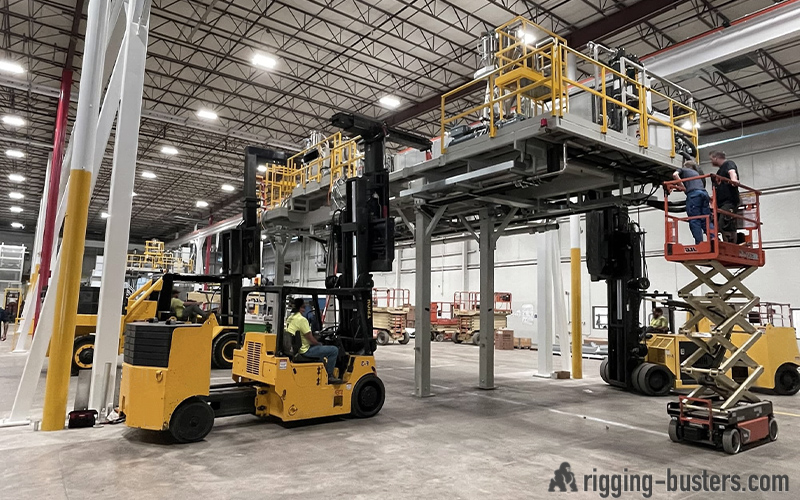
Rigging-Busters moves food processing equipment for food and beverage plants in Brampton, Mississauga and the rest of Peel Region. Our machinery movers and riggers rig out, move, set in place and install ovens, mixers, kettles, tanks, fillers, conveyors and complete packaging lines, from one machine to a whole production line.
We work for processors, bakeries, dairies, meat and poultry plants, beverage bottlers and co-packers, and for the OEMs, integrators and contractors who build their lines. Restaurant and commercial-kitchen equipment is not our work. Moving machines outside the food sector? See machinery moving in Brampton, or our rigging company in Brampton page for lifts and rigging only.
- Food and beverage plants only: processing, packaging and filling equipment, never household or restaurant moves.
- One crew from rig-out to set-in-place: transport, levelling and millwright installation included, while your trades, QA team and OEM keep their own roles.
- Fast quotes: replies usually within 2–4 working hours once we have all the details, and estimates are free.
- Minimum job: 3,500 CAD before tax. Most industrial jobs cost more, and your written quote shows the full price.
- Service area: Brampton, Mississauga and Peel, plus food plants across southern Ontario.
- Insured: $5 million in liability insurance that includes cargo coverage, plus workers’ compensation coverage (WSIB in Ontario). Certificate of insurance and WSIB clearance certificate on request.
Want a ballpark before you send the line drawing? Our Heavy Lifting & Moving Calculator gives a rough price range.
or give a call +1-647-846-5179
Food and Beverage Equipment We Move
A food plant move usually mixes three kinds of equipment, and each one is rigged differently.
Processing Equipment: Ovens, Mixers, Kettles, Tanks and Freezers
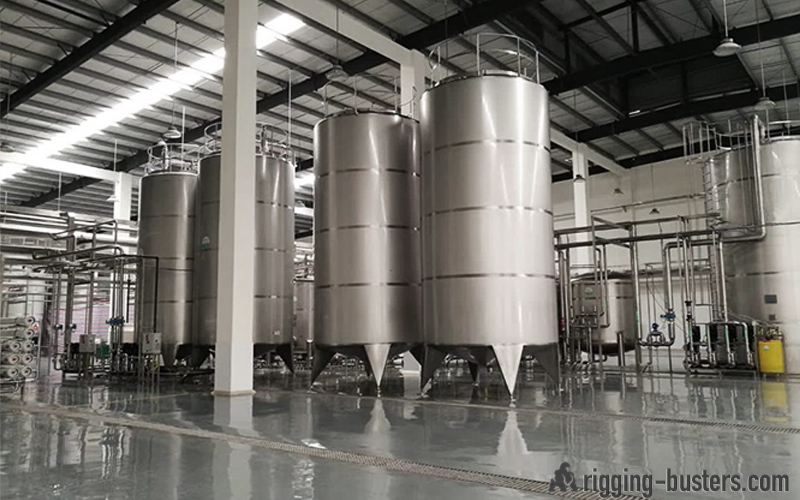
Rotary rack and tunnel ovens, spiral and horizontal mixers, bowl cutters, steam kettles, cook-chill and mixing tanks, process tanks and spiral or tunnel freezers. These machines are tall, top-heavy or piped in place, so we confirm the weight, centre of gravity and lifting points and walk the route out before anything is unbolted. Long ovens and large tanks often travel in sections, match-marked for reassembly. For a new bakery or snack line, industrial oven installation follows the same path in reverse: receive, rig in, set, level and anchor, ready for your licensed gas technician and the OEM.
Packaging and Filling Lines
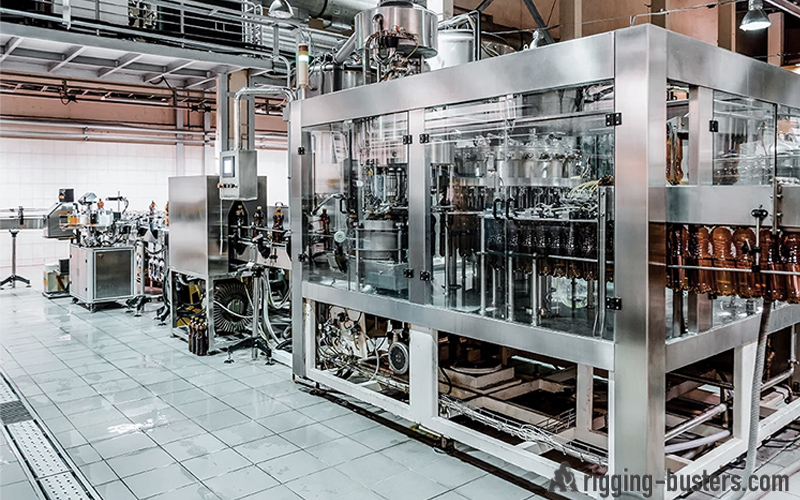
Fillers and cappers, labellers, case erectors and sealers, tray formers, checkweighers, shrink tunnels, stretch wrappers and palletizers. A packaging line is long and tightly linked, so before it comes apart we record the layout, tag every machine, guard and cable, and plan the move so the line can be rebuilt in order. Bottling, canning and carton lines get the same treatment, and change parts and spares are crated with the machine they belong to.
Conveyor Relocation and Installation
Conveyors tie a food line together: they are usually the last thing out and the first thing back in. We unbolt them in sections, label each run and support, and reinstall them to the new layout, set to height, levelled, aligned and anchored, ready for your electricians and controls integrator. Conveyor installation for a new line or an extension is part of the same service.
or give a call +1-647-846-5179
How We Move a Food Production Line in Brampton and Mississauga
A production line relocation in a food plant has two constraints that a general machinery move does not: food safety, and the date the line must be producing again. We work in this order:
- Line survey: equipment list with makes, models and weights, the old and new layouts, doors, docks and floors, and every utility connection.
- Disconnect and lockout by your trades: licensed electricians, gas technicians and refrigeration mechanics isolate power, gas, steam, water, compressed air and refrigerant.
- Cleaning by your sanitation team: product, ingredients and residue are removed under your own procedures before our crew handles the equipment.
- Tag and match-mark: each machine, conveyor run, platform and cable is labelled and photographed so the line goes back together in sequence.
- Protect food-contact parts: stainless surfaces, belts, nozzles and sensors are covered and shrink-wrapped, and loose change parts go into crates.
- Rig out: machinery skates, hydraulic gantries or jack-and-roll, with heavy-capacity lift trucks at the dock and, when a lift needs one, a licensed crane partner.
- Transport and storage: trailers matched to each load, with oversize permits and escorts arranged, and storage if the new floor is not ready.
- Set, level and anchor: our millwrights place each machine on its marks, level and align it and anchor it to the new floor.
- Restart by your team and the OEM: your trades reconnect the utilities, your QA team cleans, inspects and releases the equipment, and the OEM or your technicians recalibrate it.
Who Does What: Our Crew, Your Trades, Your QA Team and the OEM
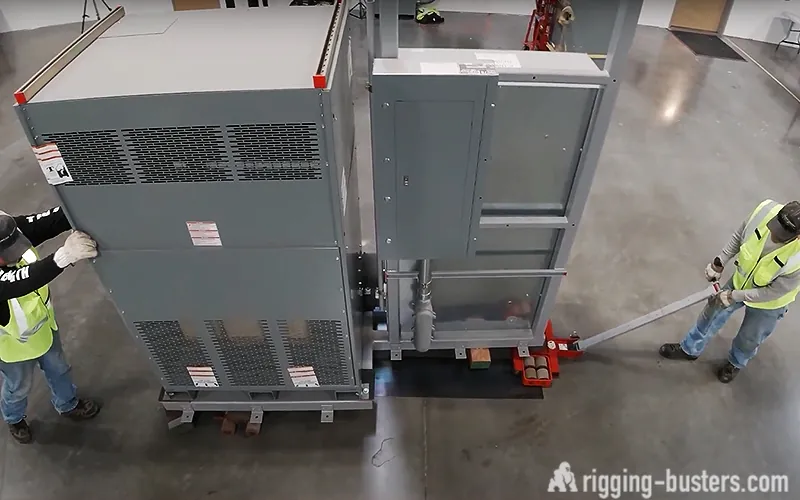
- Our crew: survey, move plan, dismantling to transport size, rigging, transport, storage, set-in-place, levelling, alignment and anchoring.
- Your licensed trades: electrical, gas, steam and refrigeration disconnects and reconnections. In Ontario, electrical work done for hire must be carried out by a Licensed Electrical Contractor (O. Reg. 570/05).
- Your sanitation and QA team: cleaning before the move, then inspection and release before production restarts.
- The OEM or integrator: controls, start-up, calibration and performance sign-off.
That split follows the food rules. For plants licensed under the Safe Food for Canadians Regulations, equipment used with food must be kept clean and sanitary (s. 50) and used, maintained and, where needed, calibrated according to the manufacturer’s instructions (s. 53), so cleaning, release and calibration stay with your team and the OEM.
Working Inside a Live Food Plant
Many line moves happen while the rest of the plant keeps producing. Our crew follows your plant’s hygiene, GMP and allergen rules: protective clothing where required, hand washing at entry points, tool and glass controls, and the routes your QA team sets. The same regulations set personal-cleanliness rules for anyone entering food areas (s. 77). Where the work zone must be closed off from production, we agree the barriers, entry points and clean-up with your QA team before the first shift.
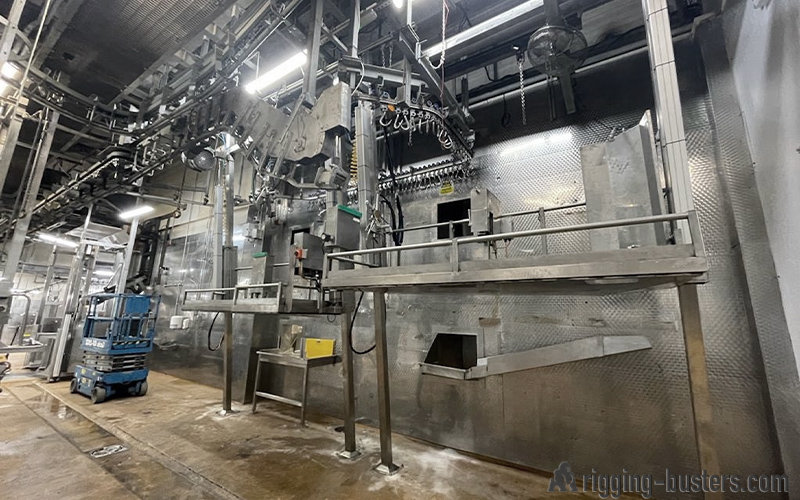
Shutdown, Night and Weekend Line Moves
Downtime is the real cost of moving a food line. We plan the work around your shutdown window: equipment protected and staged beforehand, rig-out starting as soon as sanitation releases the area, and night or weekend shifts when the schedule calls for them. In a phased move one line keeps running while the next is moved, so you keep shipping product.
or give a call +1-647-846-5179
New Line Installs and Plant Expansions in Peel
Peel’s food and beverage plants keep adding capacity, and every new line has to be received, rigged in and set before the OEM can start it up. Recent public announcements include a $141 million expansion of a Brampton bottling plant with a new line for at least 20 million more cases a year (City of Brampton, February 2026). Another is a $533 million beverage expansion in Mississauga that adds more than 100,000 sq ft of plant, a plastic-bottling line, a white-label bottling line and newer gable-top carton equipment (Invest Ontario, December 2025).
For OEMs, integrators and general contractors we unload and receive new equipment, hold it in storage until the floor is ready and rig it in through tight openings. Then our millwrights do the machinery installation: set, level, align and anchor each machine to the layout drawing, ready for your start-up team. Receiving only? See machinery movers in Brampton, and for the millwright side, what millwright services cover.
Food Plant Relocation and Consolidation
When a processor moves into a new building or folds several plants into one, the job is a series of line moves rather than one big day. We plan it line by line, so production can shift from the old site to the new one in stages, and we keep equipment in storage while the new floor, utilities or approvals catch up. Moving a whole facility? Our plant relocation services are on factory and plant relocation in Mississauga (also covering Brampton).
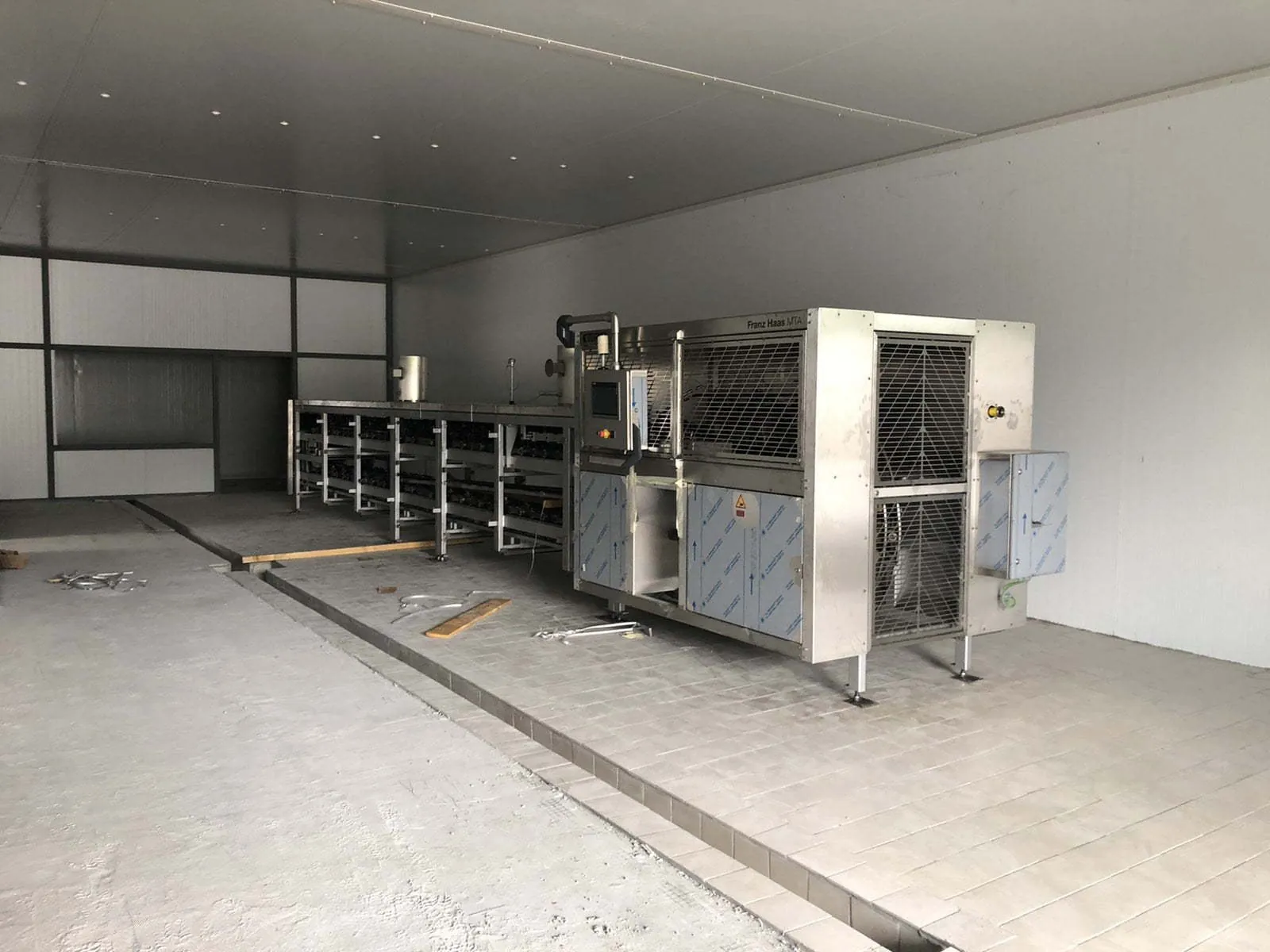
Removing Food Equipment After a Closure or Auction
When a food plant closes, its equipment is usually sold at auction, and the sale terms set a hard deadline for buyers. The terms of a Kitchener food-processing plant auction closing on 12 November 2026 give buyers until 4:00 PM on 23 November to remove large equipment, with pickups on weekdays only (sale terms). In that window, rotary rack ovens, a cook-chill tank, a tunnel freezer and a packaging line each have to be disconnected, rigged out and loaded.
Send us the lot list, the sale terms and the deadline, and we usually confirm within 2–4 working hours what we can meet. For closures outside Peel, see plant closure and auction removal in Toronto and plant decommissioning in Hamilton.
or give a call +1-647-846-5179
Food Equipment Moving Cost: What Affects the Price
Every food equipment move is quoted per job, because two lines of the same length can cost very different amounts to move. The price depends on:
- Machine count and weights: one oven, or a twenty-machine packaging line
- Line length and dismantling: how much must be sectioned, crated and match-marked
- Access: doors, docks, ceiling height, floor capacity and the route through a working plant
- Utilities and sanitation: the disconnect and cleaning steps that set the crew’s pace
- Timing: shutdown windows, nights, weekends and phased moves
- Distance and permits: route length, oversize permits and escorts
- Storage: if the new floor is not ready on moving day
Ask for one quote that covers rigging, transport, set-in-place and installation so you can compare like with like. Estimates are free, quotes are in Canadian dollars (CAD), and the Heavy Lifting and Moving Calculator gives a rough range first.
Is This the Right Service for You?
Plants searching for an industrial moving company in Brampton or Mississauga usually need one of three things: a line moved inside the plant, a line moved to a new building, or new equipment set in place. All three are our work.
A good fit: production line moves, new-line installs and conveyor runs, plant relocations and consolidations, closure and auction removals, and OEMs or integrators who need equipment received, rigged in and set.
Not a fit: restaurant and commercial-kitchen equipment, household appliances, buying, selling or repairing food equipment, food deliveries or cold-chain trucking, and job enquiries.
or give a call +1-647-846-5179
Food and Beverage Plants We Serve in Brampton, Mississauga and Peel
Brampton
Brampton’s food and beverage sector employs about 8,500 people in some 300 companies and adds more than $1.3 billion a year to Canada’s GDP. In 2026 Business Facilities magazine ranked Brampton Canada’s top food and beverage processing cluster (City of Brampton, August 2026). The city’s plants sit in industrial areas such as Bramalea, Airport Intermodal, Highway 410 and Steeles, the Goreway Drive Corridor, Bram West and Highway 427 Industrial.
Mississauga
Mississauga has more than 300 food and beverage manufacturers with over 16,500 jobs, and Invest Mississauga ranks its food and beverage sector third-largest in Canada (2024 data). Its plants are spread across employment areas such as Northeast, Gateway, Dixie, Meadowvale Business Park, Southdown and the Western Business Park. For other equipment there, see machinery movers in Mississauga.
Food Plants Elsewhere in Southern Ontario
Caledon, Etobicoke, Vaughan and Milton are a short haul from Peel, and we also take food equipment work further out in Brantford, Kitchener-Waterloo and Hamilton. See machinery movers in Brantford, machinery movers in Kitchener and machinery movers in Hamilton.
Machinery Transport and Permits in Brampton and Mississauga
Oversize food equipment needs a permit from the authority that owns each road. In Brampton, excess load permit applications are reviewed and issued by the Region of Peel, which also permits loads on Regional roads. Peel’s annual permit covers loads up to 3.7 m wide, 4.5 m high and 25 m long; anything bigger needs a single permit, which is limited to loads under 120,000 kg.
On Mississauga’s city roads, the City’s excess load permit takes at least five business days, or fourteen for a superload, and a single trip needs at least two private escort vehicles. Highways 401, 403, 410 and 427 are provincial, so they need an MTO oversize/overweight permit, applied for at least five business days ahead. We arrange the permits and escorts as part of the move.
Towns and Cities We Serve Around Peel
| City | Province | Country |
|---|---|---|
| Brampton | Ontario | Canada |
| Acton | Ontario | Canada |
| Alliston | Ontario | Canada |
| Aurora | Ontario | Canada |
| Bolton | Ontario | Canada |
| Burlington | Ontario | Canada |
| Brampton | Ontario | Canada |
| Caledon East | Ontario | Canada |
| Erin | Ontario | Canada |
| Etobicoke | Ontario | Canada |
| Georgetown | Ontario | Canada |
| Markham | Ontario | Canada |
| Milton | Ontario | Canada |
| Mississauga | Ontario | Canada |
| Newmarket | Ontario | Canada |
| Richmond Hill | Ontario | Canada |
| Oakville | Ontario | Canada |
| Orangeville | Ontario | Canada |
| Tottenham | Ontario | Canada |
| Vaughan | Ontario | Canada |
Have These Ready for an Exact Quote
The more we know about the line, the faster and more exact the quote. Send these with your quote request:
- Equipment list: makes, models and weights (nameplate photos help)
- Line drawing: the current layout and, if you have it, the new one
- Utilities: what connects where, and who disconnects it
- Your plant rules: sanitation, GMP and allergen procedures for contractors
- Timing: your shutdown window and the date production must restart
- Destination: the address and access, with docks, doors and floor
- Photos of the line and the route out
or give a call +1-647-846-5179
Other Services in Brampton and Mississauga
Related services for Peel plants (or browse all our services in Brampton and all our services in Mississauga):
- Heavy Equipment and Machinery Movers in Brampton, ON
- Heavy and Industrial Rigging Services in Brampton, ON
- CNC Machine Movers in Brampton, ON
- Lab and Medical Equipment Movers in Toronto, ON
- Pharmaceutical Equipment Relocation and Rigging in Ontario
- Forklift Moving Service in Brampton, ON
- Machinery Movers in Mississauga, ON
- Industrial Rigging Services in Mississauga, ON
Location of our sales office:
2 Dewside Dr, Brampton, ON L6R 0X5, Canada
Food Processing Equipment Moving: FAQ
Each food equipment move is priced per job. Cost depends on how many machines move and what they weigh, the length of the line, access through the plant, the utility and sanitation steps, your shutdown timing, distance and permits, and any storage. Use our Heavy Lifting and Moving Calculator for a rough range, or send your equipment list for an exact quote.
Yes. We survey the line, tag and match-mark every machine and conveyor, and move them in the order the line will be rebuilt, so the restart goes quickly. The work is planned around your shutdown window, with night or weekend shifts when needed, and a phased move can keep one line running while another moves. Storage covers any gap between sites.
Your sanitation team cleans the equipment first. Then our crew covers stainless and food-contact surfaces, wraps each machine and crates loose change parts before rigging, and the machines travel secured on trailers. At the new site your QA team cleans, inspects and releases the equipment, because plants licensed under the Safe Food for Canadians Regulations must keep it clean and sanitary.
Your licensed trades do. In Ontario, electrical work done for hire must be carried out by a Licensed Electrical Contractor under O. Reg. 570/05, and gas and refrigeration work need licensed technicians. They isolate, lock out and disconnect each service, then reconnect it at the new site. We schedule the rig-out around their work and leave each machine set and levelled, ready for reconnection.
Yes. Before the first shift we agree the rules with your QA team: protective clothing, hand washing, tool and glass controls, allergen zones, entry points and traffic routes. The Safe Food for Canadians Regulations also set personal-cleanliness rules for anyone entering food areas. Our crew works to your plant procedures and safety program, including when production continues next to the work zone.
Yes. For Brampton and Mississauga plants adding capacity, we receive and unload new equipment, store it if the floor is not ready, rig it in, then set, level, align and anchor it to the layout drawing. Conveyor installation and extensions are part of the job. Your trades connect the utilities, and the OEM or integrator handles start-up and calibration.
Yes. Send the lot list, the sale terms and the removal deadline. Food plant auctions in southern Ontario often give buyers about two weeks or less: a Kitchener food plant sale closing on 12 November 2026 allows until 23 November for large equipment. Once we have all the details, we usually reply within 2–4 working hours; then we rig out, load and deliver to your plant or into storage.
For an oversize load, yes. In Brampton, excess load permits are reviewed and issued by the Region of Peel. On Mississauga city roads, the City excess load permit takes at least five business days, or fourteen for a superload, and a single trip needs two private escort vehicles. Highways 401, 403, 410 and 427 need an MTO permit. We arrange them with the move.
All of Peel Region, including Brampton’s Bramalea, Airport Intermodal, Highway 410 and Steeles, Goreway Drive, Bram West and Highway 427 industrial areas, the Northeast, Gateway, Dixie, Meadowvale Business Park, Southdown and Western Business Park employment areas of Mississauga, and Caledon. We also move food equipment for plants in Etobicoke, Vaughan, Milton, Brantford, Kitchener-Waterloo and Hamilton.
No. We move industrial food and beverage plant equipment only: processing machinery, packaging and filling lines, conveyors, tanks and ovens in manufacturing plants. For restaurant ranges, walk-in coolers or commercial-kitchen installs, a restaurant equipment supplier or a commercial mover is the better choice. If you are moving a food production line in Peel, send us the details.