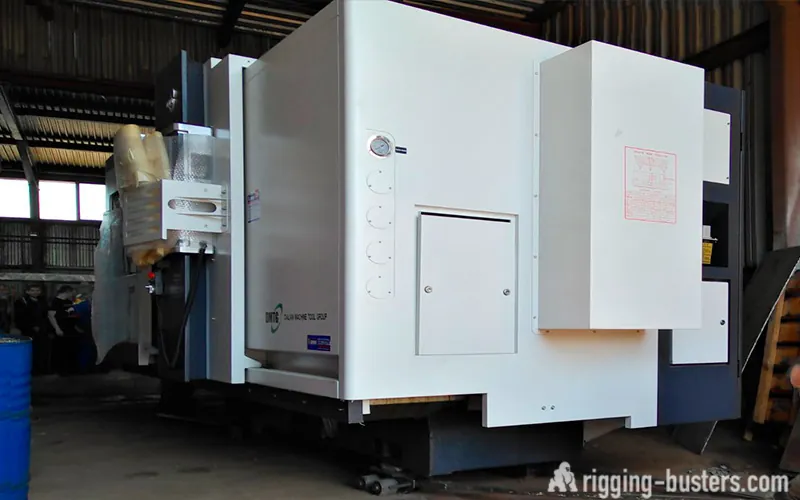
MRI rigging is the physical move of the magnet and the rest of the system: out of one room, onto a truck and into the next room. In Ontario the manufacturer’s (OEM’s) engineers ramp the magnet down, de-install, re-install and calibrate it, while Rigging-Busters’ riggers survey the route, rig the equipment out, move it and set it in place. We do the same for CT, PET-CT, LINAC, cath-lab and X-ray equipment.
Our imaging rigging centres on Toronto and the Greater Toronto Area (GTA), and we take MRI installation and relocation rigging across Ontario for hospitals, community imaging clinics, imaging resellers, and the OEM install teams and contractors who hire riggers.
- Hospital and imaging equipment only: no hospital beds, home medical equipment, household or office moves.
- Rigging, not system work: we rig, move and set in place; ramp-down, calibration and acceptance tests stay with your OEM.
- Fast quotes: replies within 2–4 business hours.
- Service area: Toronto and the GTA, Hamilton, Niagara, Kitchener-Waterloo and London; Ottawa on request.
Need a number for a hospital generator or chiller first? Our Heavy Lifting & Moving Calculator gives a rough price range; imaging moves are priced from the OEM’s site plan.
or give a call +1-647-846-5179
What We Do on an Imaging Move, and What Your OEM Does
Every imaging move has two halves. The OEM’s engineers own the system: ramp-down, disconnection, de-installation, re-installation, calibration and acceptance testing. Our riggers own the load: getting a magnet or gantry that weighs several tonnes from its room to the truck, and from the truck to its new position, without damage to the equipment or the building.
- OEM engineers: ramp the magnet down under a cryogen plan, disconnect the system, and later re-install it, calibrate it and sign it off.
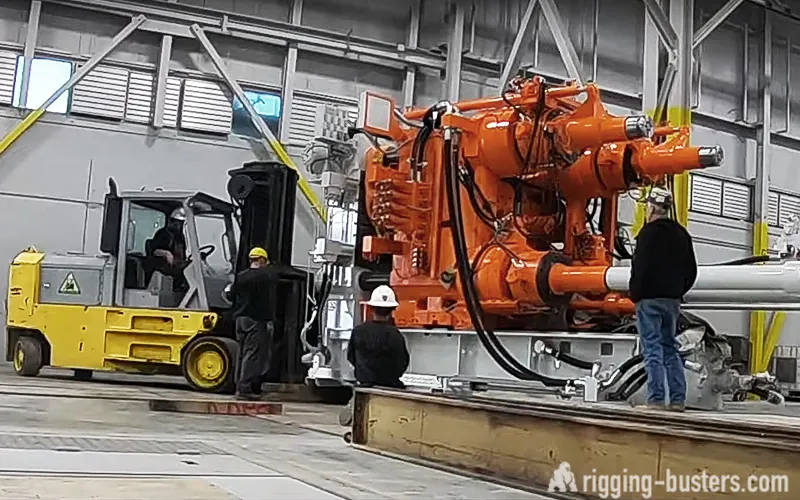
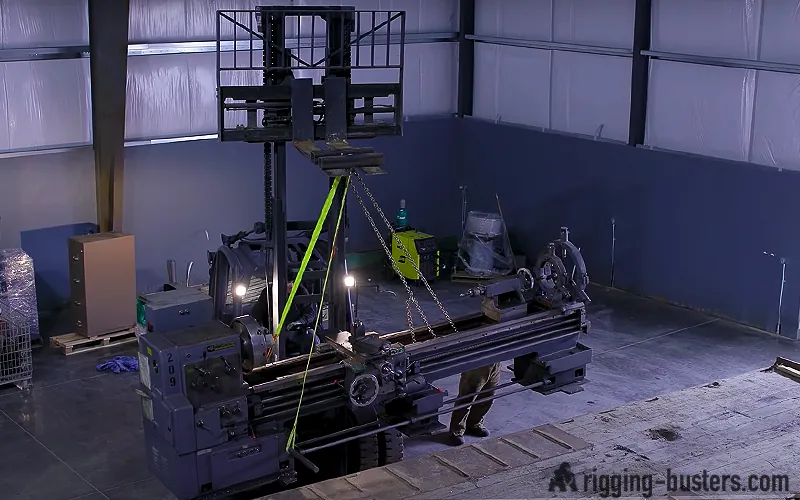
- Rigging-Busters riggers: route survey, floor and wall protection, rigging out on machinery skates, hydraulic gantries or jack-and-roll, padded and secured transport, storage when needed, then rigging in and setting the unit on its marks.
- Licensed trades: your electricians isolate and reconnect power (in Ontario, electrical work for hire needs a Licensed Electrical Contractor under O. Reg. 570/05), and mechanical trades handle chilled water and quench vent piping.
- Your contractor or facilities team: wall openings, RF shielding, hoarding and the hospital’s approvals.
Who hires the rigger varies. Some manufacturers bring their own crew, some ask the hospital or clinic to hire one, and on vendor-managed contracts the vendor’s project manager usually picks. We quote the rigging scope to whoever holds it, and we keep our tasks separate from the OEM’s so nothing falls between the two.
Imaging Equipment We Rig: MRI, CT, PET-CT, LINAC, Cath Lab, X-ray
- MRI magnets, 1.5T and 3T, with their equipment cabinets and patient tables
- CT and PET-CT gantries, tables and power distribution units
- Linear accelerators (LINAC) and other radiation therapy equipment for treatment vaults
- Cath-lab and interventional radiology systems, C-arms and fluoroscopy units
- X-ray rooms and mammography units
Weights vary a lot, so every job starts from the OEM’s figures. A 3T MRI system can weigh over 10,000 lb, and the magnets installed at Toronto Western Hospital weighed up to 13 tonnes each.
Rig-Out for Resale, Replacement or Disposal
When a scanner leaves service, it still has to come out of the building in one piece if a reseller or a new owner is waiting for it. We handle medical equipment removal as rigging: we take the de-installed MRI, CT or X-ray system out of the room, pad or crate it to the buyer’s instructions and load it for shipping, including cross-border delivery to buyers in the US. If the replacement arrives later than planned, we can store either unit until the room is ready.
or give a call +1-647-846-5179
How an MRI Is Moved: Route, Rigging and Set-In-Place
Moving an MRI is planned backwards from the room. The questions are always the same: how heavy the unit is, how wide and tall it is on its transport skid, and what the strongest, straightest path is between the truck and the room. The answers decide whether the magnet rolls in on skates, rises on a gantry or comes in by crane.
Route Survey: Doors, Corridors, Elevators and Floor Loading
Before quoting, we walk the route from the delivery point to the room. We measure doors, corridor widths and turns, ceiling heights, elevator doors and car sizes, and we check floor loading along the path with your facilities team or structural engineer. Where a slab cannot take the load, the route gets steel plates, cribbing, or shoring from the floor below, or a different way in.
Crane Lifts and Wall Openings
Many imaging suites above ground level are reached from outside. The magnet is lifted to a temporary opening in the exterior wall or through a roof hatch, then rolled to the room on skates. At Toronto Western Hospital, four MRI magnets of up to 13 tonnes each were lifted by crane into a blown-out wall on the third floor and pushed down a hallway supported by steel beams on the floor below, taking up to two days per magnet. On our jobs the lift is done with our crane or a partner crane chosen for that lift; see crane, hoisting and heavy lifting in Toronto.
Building a new MRI suite? Plan a knock-out panel or roof hatch on the delivery route now. It makes the first install easier and cheaper, and it pays off again when the magnet is replaced years later.
Transport and Permits in Toronto, Mississauga and Ontario
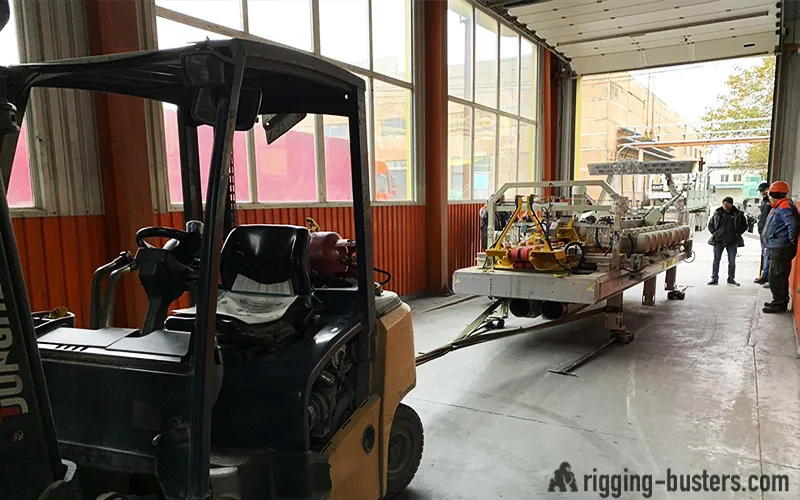
Oversize loads and crane set-ups need permits, and we arrange them. On Toronto streets, a truck and load that reaches 2.59 m wide, 4.15 m high, 21.33 m long or 50 t needs a City of Toronto single-trip oversize load permit, which normally takes 7 to 10 business days, and oversize loads can’t use the Don Valley Parkway, the Allen Expressway or the Gardiner east of the Humber. In Mississauga, the City’s excess load permit needs at least 5 business days, and the Region of Peel issues its own permits for regional roads, including a road occupancy permit for a crane set-up on roads such as Dixie or Derry Road. Provincial highways need an MTO oversize/overweight permit, applied for at least 5 business days ahead.
or give a call +1-647-846-5179
Hospital and Clinic Projects Across Ontario
Ontario’s imaging fleet is growing and turning over, which means rigging at both ends of a scanner’s life. Recent public examples:
- Queensway Health Centre in Etobicoke opened its first MRI on April 2, 2026, giving Trillium Health Partners five MRI machines.
- Credit Valley Hospital in Mississauga is adding three Halcyon LINACs and an orthovoltage unit to the Carlo Fidani Regional Cancer Centre, with construction expected from 2026 and all units operational by 2028.
- The new Peter Gilgan Mississauga Hospital passed its foundation milestone in June 2026, with seven tower cranes on site.
- Ontario is adding 35 newly licensed community centres for MRI and CT scans, part of 57 new community surgical and diagnostic centres announced in July 2025.
- In Niagara Falls, the new South Niagara Hospital is scheduled to open in 2028.
We list these as public information about where imaging work is happening, not as our clients. Projects like these are usually installed by the manufacturer’s team and the hospital’s contractor, who choose the riggers.
Hospital Plant Equipment: Generators, Chillers, Sterilizers
Imaging rooms depend on plant, and the same crew can move it. We rig and set in place emergency generators, chillers and the dedicated cooling that MRI and CT rooms rely on, steam sterilizers and autoclaves for central sterile departments, and transformers, switchgear and UPS cabinets, usually for the mechanical or electrical contractor doing the replacement.
For power equipment, see data centre equipment rigging in Toronto (generators, UPS and switchgear) and electrical transformer moving in Toronto. For heavy lab and pharma equipment, see heavy lab and medical equipment movers in Toronto.
MRI Rigging Cost in Ontario: What Affects the Price
There is no fixed price for MRI rigging. Two moves of the same model can cost very different amounts, because the route matters as much as the magnet. The main cost drivers:
- Magnet type and weight: open MRI magnets are generally much heavier than closed-bore magnets, and heavier loads need heavier rigging gear.
- Room location: a ground-floor room facing a parking lot is the simplest case; basements, upper floors and long corridors add protection, shoring and time.
- Access: a roof hatch or knock-out panel is quicker and cheaper than cutting and rebuilding a wall.
- Crane and street work: crane time, plus permits or lane closures when the crane or truck stands on a busy street (crane time is included in your quote).
- Schedule: night and weekend work around clinic hours, and how the move lines up with the OEM’s ramp-down and install dates.
- Transport and storage: distance, padding or crating, cross-border delivery to a buyer, and storage until the room is ready.
Send the OEM’s site plan and route photos and we will reply within 2–4 business hours. For a rough figure on plant equipment, use the Heavy Lifting & Moving Calculator.
How to Compare Imaging Riggers in Ontario
Comparing quotes for an MRI move or hospital equipment installation? Check that each rigger covers the same ground:
- a route survey on site, not only a phone estimate
- a written method: skates, gantry, jack-and-roll or crane, and how floors and walls are protected
- the OEM’s tasks and the rigger’s tasks listed separately, with nothing left between them
- who supplies the crane, and who arranges street permits and lane closures
- how the crew will meet your hospital’s contractor, safety and infection-control requirements
- storage if the room or the new unit is late, and references from comparable imaging or hospital jobs
Working Inside a Hospital: Site Rules
Hospitals stay open while equipment moves, so the move fits around patient care. We plan routes away from clinical areas where possible, protect floors, door frames and elevators, and work nights or weekends when corridors must stay clear during the day.
Construction and renovation in Canadian health care facilities is managed under infection-control rules, with CSA Z317.13 as the national standard. Your infection-prevention and facilities teams set the hoarding, cleaning and access rules, and our crew works inside them. Tell us about contractor orientation, sign-in and elevator bookings with the quote request, so the plan and the price include them.
Good Fit and Not a Fit
Good fit: MRI installation and relocation rigging with your OEM, CT, PET-CT and LINAC moves, cath-lab and X-ray rooms, scanner rig-outs for resale, storage between rig-out and rig-in, and hospital generators, chillers and sterilizers.
Not a fit: hospital beds, home medical equipment and mobility aids; medical offices and clinic furniture; specimen and cold-chain transport and lab packing (see our lab pages); patient transport; equipment sales, rental or service; RF shielding and room construction; and ramp-down, calibration or acceptance testing, which stay with your OEM.
Have These Ready for an Exact Quote
An imaging quote is only as good as the route information behind it. Please include these in your quote request:
- System: modality, make and model, and the OEM’s weights and dimensions on the transport skid
- Addresses and floors: both sites, the room locations and the delivery points
- Route photos: doors, corridors, elevators, ramps and any planned wall opening or roof hatch
- Crane position: where a crane could stand, and whether that is on a public road
- Dates: the OEM’s ramp-down and install dates, and the night or weekend windows you can offer
- Site rules: your contractor, safety and infection-control requirements, and who de-installs and re-installs
Areas We Cover in Ontario
Our imaging rigging centres on Toronto (including Etobicoke, North York and Scarborough) and the GTA: Mississauga, Brampton, Vaughan, Markham, Richmond Hill, Oakville and Burlington. We also take MRI and imaging rigging in Hamilton and the Niagara Region, Kitchener-Waterloo, Guelph and London, and in Ottawa and Eastern Ontario on request.
Local pages: hospital and MRI equipment rigging in Hamilton, heavy lab and medical equipment movers in Toronto and lab and medical equipment movers in Mississauga.
or give a call +1-647-846-5179
Related Services in Toronto and Ontario
Other heavy work our crews take on, or see all our services in Toronto:
- Hospital and MRI Equipment Rigging in Hamilton, ON
- Heavy Lab, Pharma & Medical Equipment Movers in Toronto, ON
- Lab & Medical Equipment Movers in Mississauga, ON
- Data Centre Equipment Rigging in Toronto, ON
- Electrical Transformer Moving & Rigging in Toronto, ON
- Crane, Hoisting and Heavy Lifting Services in Toronto, ON
- Heavy Machinery & Equipment Movers in Ontario
MRI and Medical Imaging Rigging in Ontario: FAQ
Both, with different jobs. The manufacturer’s engineers ramp the magnet down, disconnect and de-install the system, then re-install and calibrate it. A rigging crew moves the physical load: out of the room, onto the truck, into the new room and onto its marks. Some manufacturers bring their own riggers; many projects hire one separately, which is where we come in.
There is no flat rate. The price depends on the magnet type and weight, which floor the room is on, whether a crane or a wall opening is needed, night or weekend timing, permits and storage. Send the OEM site plan and route photos for an exact quote, or try our Heavy Lifting and Moving Calculator for plant equipment.
In most moves, yes, and that is the OEM’s job, not ours. A superconducting magnet is normally ramped down under a cryogen management plan before de-installation, because a poor ramp-down can damage it or trigger a quench. Moving a magnet that is still energized is possible in some cases, at higher cost and risk. We book our crew around the OEM’s ramp-down date.
A 3T MRI system can weigh over 10,000 lb, and some magnets weigh far more; the four magnets at Toronto Western Hospital weighed up to 13 tonnes each. Ground-floor rooms are reached through a delivery door on skates or a gantry. Upper floors usually need a crane lift through a wall opening or roof hatch, then a shored route to the room.
Yes. CT and PET-CT gantries are heavy, fragile and sensitive to tilting, so they travel upright on skates or dollies with padding and tie-downs. LINAC components go into shielded treatment vaults, so the route and lifting points are agreed with the OEM’s install team first. In each case we rig and set in place, and the manufacturer installs and calibrates.
Yes. Once the OEM or your service company has de-installed it, we rig the old MRI, CT or X-ray system out of the room, pad or crate it to the buyer’s instructions and load it for shipping, including cross-border delivery to US buyers. If the buyer collects later, we can store it. Clearing a whole department? Send us the equipment list.
Only for oversize or overweight loads, and we arrange them. In Toronto, a truck and load reaching 2.59 m wide, 4.15 m high, 21.33 m long or 50 t needs a City single-trip permit, normally 7 to 10 business days. Mississauga needs at least 5 business days for its excess load permit, Peel permits its own roads, and MTO wants highway permits requested 5 business days ahead.
Yes, and many imaging moves happen at night or on weekends so corridors and elevators stay free for patients during the day. We work to the hospital’s contractor rules and the infection-control measures its team sets, such as hoarding and clean routes. Include those rules and your available windows in the quote request, so the crew plan and the price match them.
No. We rig heavy imaging, hospital plant and lab equipment only. Hospital beds, mobility aids, home medical equipment and medical-office or clinic furniture are better handled by a medical supply company or an office mover. For heavier lab and clinic equipment in the GTA, see our heavy lab and medical equipment movers in Toronto.
We focus on Toronto and the GTA, including Mississauga, Brampton, Vaughan, Markham, Richmond Hill, Oakville and Burlington. We also work in Hamilton and the Niagara Region, Kitchener-Waterloo, Guelph and London, and in Ottawa on request. For Hamilton and Niagara hospitals, see hospital and MRI equipment rigging in Hamilton.