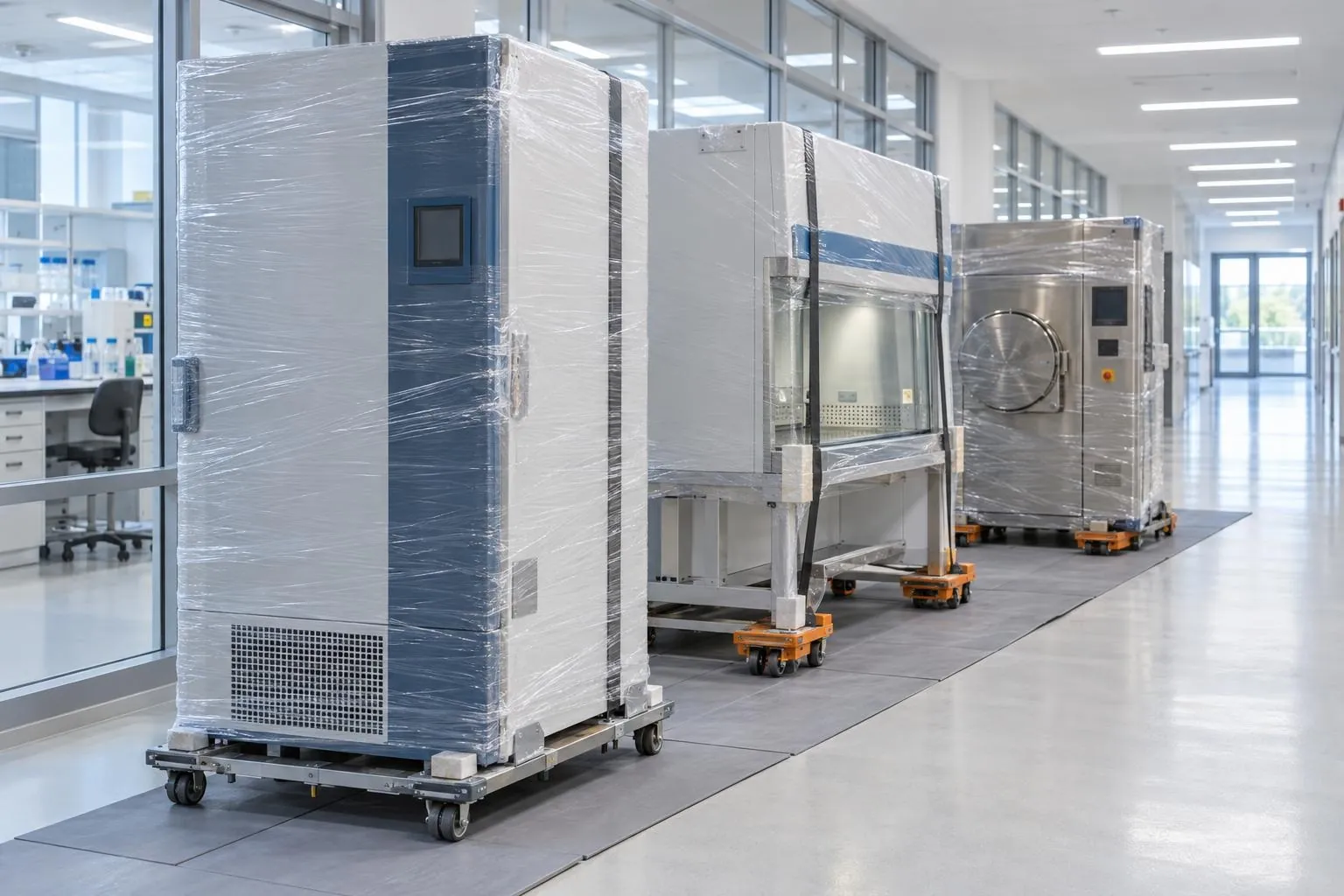
Looking for lab and medical equipment movers in Montreal, or a crew for the heavy part of a laboratory relocation? Rigging-Busters rigs, moves and places the heavy, high-value units of labs, hospitals and research buildings across the island, Laval and the North and South Shores.
Think -80 °C freezers, biosafety cabinets, autoclaves, pharmaceutical freeze dryers, chillers and mass spectrometers. Lab movers pack benchtop instruments and samples; we take the units that need skates, a gantry or a heavy lift truck.
- Industrial work only: heavy lab, hospital and research equipment; no benchtop packing, sample transport, office or residential moves.
- One crew for the whole job: rigging, transport, set-in-place, levelling and millwright installation.
- Minimum project: 3,500 CAD before tax. Most lab moves cost more; your written quote lists what is included and the price.
- Fast answers: we usually reply within 2–4 working hours once we have all the details, and estimates are free.
- Where: Greater Montreal, and other Quebec cities on request.
- Insured: $5 million in liability insurance that includes cargo coverage, plus workers’ compensation coverage, with a certificate of insurance on request.
Planning a budget first? Our Heavy Lifting & Moving Calculator gives a quick, rough price range.
or give a call +1–438-239-1237
Lab Relocation in Montreal, Step by Step
Several teams share a lab move, so we fit our part around theirs in seven steps:
- Equipment list: make, model, weight and size of each unit, with photos, both addresses and target dates.
- Walk-through: corridors, doors, freight elevators, docks and floor loads in both buildings.
- Plan: method, crew, truck and timing, with evening or weekend shifts where the building stays open.
- Your preparation: the lab empties and decontaminates each unit, licensed trades disconnect the services, and the manufacturer de-installs its instruments.
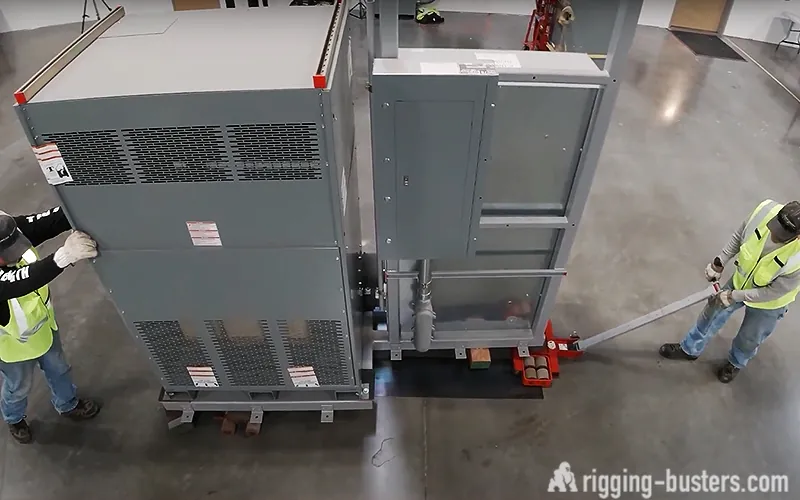
- Rigging out: machinery skates or a hydraulic gantry, with floors, walls and door frames protected.
- Transport: upright, strapped and braced, in a truck matched to the load.
- Placement and levelling: each unit set on its marked spot and levelled, ready for reconnection and the manufacturer’s start-up.

Model numbers and a few photos are enough to start: estimates are free, and we usually reply within 2–4 working hours once we have all the details.
or give a call +1–438-239-1237
Heavy Lab and Medical Equipment We Move
Our crew takes the heavy, costly end of a lab or hospital move:
- pharmaceutical freeze dryers (lyophilizers), once your licensed trades have disconnected them
- chillers and process cooling units, drained and disconnected by your trades
- -80 °C and other ultra-low freezers, emptied first
- biosafety cabinets, decontaminated before and retested after the move
- autoclaves and steam sterilizers
- mass spectrometers and other vendor-serviced instruments
- imaging equipment, with MRI units moved in coordination with the manufacturer
- incubators, floor-standing centrifuges and environmental chambers
- transformers, switchgear and generators that serve a lab (see industrial rigging)
- pharmaceutical production equipment during a plant relocation
Not a Fit for Our Crew
Benchtop packing, glassware and chemicals; sample or specimen transport; hospital beds and home medical equipment; clinic, office and residential moves. A lab mover or a medical supplier handles those.
Not sure a unit needs riggers? Send a nameplate photo and the route out.
or give a call +1–438-239-1237
Moving Freeze Dryers, Chillers, Freezers and Biosafety Cabinets
The manufacturer and your trades prepare and restart each unit, your biosafety officer handles containment, and our riggers move the units in between.
Freeze Dryers (Lyophilizers)
A pharmaceutical freeze dryer moves as a validated system. Your licensed trades disconnect the refrigeration, steam, vacuum and power, and the manufacturer or your validation team prepares the unit and requalifies it after the move. We check the route’s height, width and floor capacity first, then move the unit or its modules braced and set them level for reconnection.
Chillers and Process Cooling Units
Your licensed refrigeration and electrical trades recover or isolate the refrigerant, drain the water side and disconnect the chiller. We rig it out of the plant room or off the roof, with a crane when the lift needs one, and set it on the new pad or plinth for reconnection.
-80 °C Freezers
An ultra-low freezer travels empty and upright, while your team or a cold-chain carrier moves the samples. We follow your model’s manual on tilt and on the wait before power-on. One manual for a freezer rated to -86 °C, for example, asks for a wait of at least 6 hours after installation before plugging it in.
Biosafety Cabinets
Under the Canadian Biosafety Standard, certification of Class II cabinets follows NSF/ANSI 49. The Public Health Agency of Canada’s Canadian Biosafety Handbook also calls for testing after a relocation. Your biosafety officer arranges decontamination before the move, and a certifier retests the cabinet once we have placed it.
Mass Spectrometers and Other Vendor-Serviced Instruments
Some instrument makers prepare and restart their own systems but leave the heavy transport to others. One vendor’s relocation service, for example, covers assessment, packaging and recommissioning, but not the transport itself. That part is the job we plan.

Moving an instrument? Give the make, the model and the vendor’s de-installation and re-installation dates.
or give a call +1–438-239-1237
Lab Relocation Services: Where Our Crew Fits
We offer moving, rigging, handling, transport and placement of lab and medical equipment. In the new room our millwrights level each unit and anchor it where the manufacturer calls for it.
- The manufacturer or its service firm: de-installation, re-installation, calibration and start-up of instruments.
- Your biosafety officer: decontamination, containment rules and cabinet recertification.
- Your lab team: emptying freezers and incubators, and sending samples and chemicals with a lab mover or cold-chain carrier.
- Licensed trades: disconnecting and reconnecting power, water, steam, gases and drains.
- Our crew: route survey, rigging, transport, set-in-place, levelling and anchoring of each heavy unit.
Hospitals, Research Centres and Building Logistics
Many Montreal lab moves happen in occupied buildings. Greater Montreal’s life sciences cluster counts nearly 750 organizations and more than 150 research centres (Montréal InVivo, 2025). Downtown, the CHUM research centre alone reports 75 research labs. The MUHC’s research institute works from the Glen site and the Montreal General Hospital. We check:
- Freight elevators: cab size, door height and rated load, booked with building management.
- Loading docks: dock height, truck length and the time slot we are given.
- Floor loads: skates concentrate weight, so we confirm floor ratings with your building engineer and spread loads with plates when needed.
- After-hours work: evening and weekend shifts keep labs, clinics and patient areas running.
- Hospital rules: the infection prevention and control team may set routes, cleaning and dust measures for contractors, and we follow them.
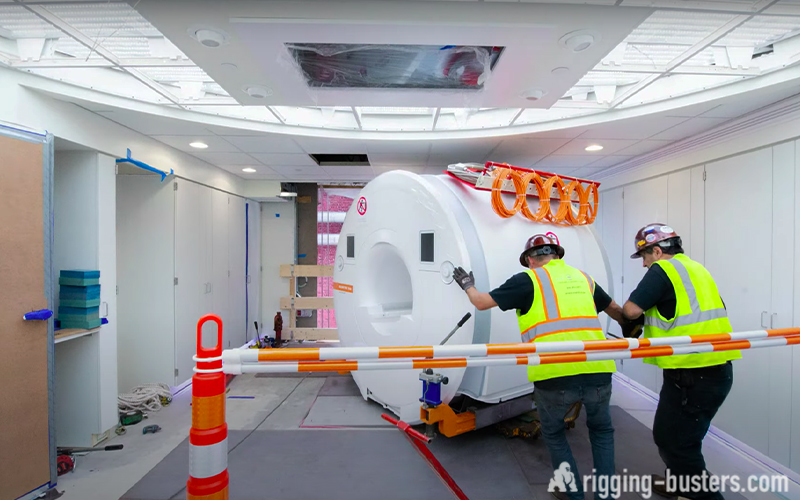
Moving equipment inside a hospital? Send the floors, the elevator, your work windows and the building’s contractor rules.
or give a call +1–438-239-1237
Lab Equipment Transport and Permits in Quebec
Most lab units ride in a local truck within legal road limits and need no permit. An oversize skid, chamber or crated instrument is different: it needs an MTMD special permit (French), requested through the GPM system. A specific permit costs C$141 (classes 1–3) or C$305 (classes 4–7) in 2026, and classes 6 and 7 add a feasibility study.
In Montreal, each borough on the route adds an oversize-vehicle permit (French) above 2.6 m wide or 4.15 m high. The same applies above 50 t when the haul needs a class 6 or 7 permit. Apply at least 5 business days ahead in most boroughs, or 10 in Saint-Laurent and Ville-Marie. Without a usable dock, street parking for the truck takes an occupation permit (2–10 business days). Escorts apply above set sizes, for example a front escort over 4.5 m high. The 2026 spring thaw period (French), when allowed loads drop, ran from 16 March to 15 May in southern Quebec. Permits and escorts are planned before the move date.
What a Lab Move Costs in Montreal
Each lab move is priced on its details. The main cost drivers:
- The units: how many, their weight, size and centre of gravity
- Access in both buildings: elevators, docks, door widths, corridors and floor loads
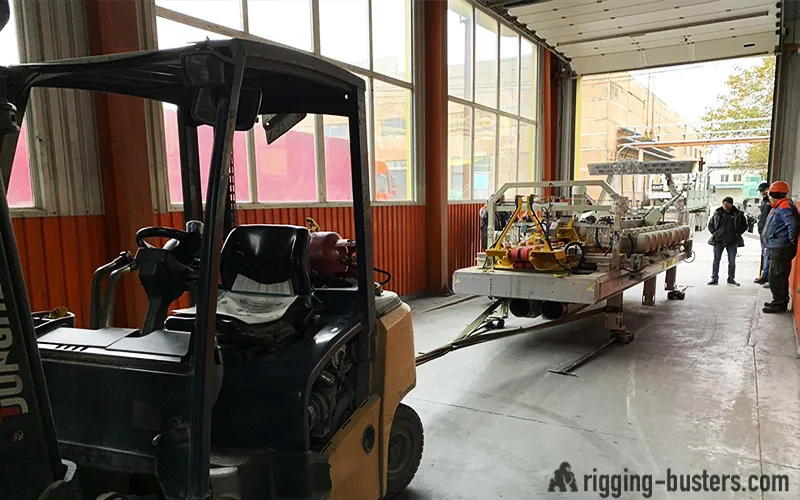
- Method: skates, hydraulic gantry or heavy lift truck
- Timing: evening or weekend shifts, and dates tied to the vendor’s de-installation and re-installation
- Site rules: infection-control measures, escorts and floor protection
- Distance and permits: route length, plus permits or escorts for an oversize load
The minimum project is 3,500 CAD, and most lab moves cost more. Estimates are free, and our pricing page explains how quotes are built.
What to Send for a Lab Move Quote
Add these to your quote request:
- Equipment list: make, model, weight and size of each unit, with a nameplate photo
- Instrument dates: the vendor’s de-installation and re-installation dates
- Both buildings: addresses, floors, freight elevator size and capacity, door widths and the loading dock
- Who prepares what: who empties, decontaminates and disconnects each unit
- Site rules: after-hours limits, sign-in steps and infection-control requirements
- Photos: each unit and its route to the truck, including tight turns and thresholds
or give a call +1–438-239-1237
Service Area: Montreal, Laval and the North and South Shores
On the island, we move lab and hospital equipment downtown, in Saint-Laurent and across the other boroughs. Saint-Laurent holds Technoparc Montréal’s Campus Saint-Laurent, which the City calls Canada’s largest technology park, with more than 100 firms, pharmaceutical makers among them. In Laval, Biotech City counts about 120 companies and 5,500 jobs around the INRS Armand-Frappier research centre.
We also serve the South Shore (Longueuil, Boucherville, Varennes, Saint-Hubert, Saint-Jean-sur-Richelieu) and the North Shore (Mirabel, Saint-Jérôme, Blainville, Terrebonne). Elsewhere in Quebec, such as Québec City, describe the job in your request. For Sherbrooke, see our Sherbrooke lab moving page (in French).
Main cities we serve around Montreal
| City | Province | Country |
|---|---|---|
| Montreal | Quebec | Canada |
| Beloeil | Quebec | Canada |
| Boucherville | Quebec | Canada |
| Brossard | Quebec | Canada |
| Candiac | Quebec | Canada |
| Chambly | Quebec | Canada |
| Châteauguay | Quebec | Canada |
| Laval | Quebec | Canada |
| Longueuil | Quebec | Canada |
| Marieville | Quebec | Canada |
| McMasterville | Quebec | Canada |
| Mercier | Quebec | Canada |
| Mont-Saint-Hilaire | Quebec | Canada |
| Otterburn Park | Quebec | Canada |
| Pointe-Claire | Quebec | Canada |
| Repentigny | Quebec | Canada |
| Richelieu | Quebec | Canada |
| Saint-Basile-le-Grand | Quebec | Canada |
| Saint-Eustache | Quebec | Canada |
| Saint-Jean-sur-Richelieu | Quebec | Canada |
| Saint-Jérôme | Quebec | Canada |
| Sainte-Julie | Quebec | Canada |
| Saint-Hyacinthe | Quebec | Canada |
| Saint-Rémi | Quebec | Canada |
| St-Bruno-de-Montarville | Quebec | Canada |
| Terrebonne | Quebec | Canada |
Lab in Laval or on the South Shore? Include both addresses and floor levels.
or give a call +1–438-239-1237
Other Services in Montreal
Browse all our services in Montreal, or go straight to:
- Machinery and industrial movers in Montreal
- Industrial rigging services in Montreal
- Factory and plant relocation in Montreal
- CNC machine movers in Montreal
- Forklift moving service in Montreal
- En français : déménagement de laboratoire et d’équipement médical à Montréal
Location of our sales office:
605 Atwater Ave, Montreal, Quebec H3J 2T8, Canada
Lab & Medical Equipment Movers in Montreal: FAQ
Heavy, high-value units: -80 °C freezers, biosafety cabinets, autoclaves, freeze dryers, chillers, mass spectrometers and imaging equipment. Benchtop instruments, glassware and samples go with a specialist lab mover.
We handle the heavy part. A lab mover usually packs instruments and samples, the manufacturer de-installs its instruments, and your facilities team readies the rooms. We rig, move and place the heavy units on the same schedule.
No. We don’t move NMR spectrometers or electron microscopes; the manufacturer and its specialist movers handle those. We do move the heavy units around them, on the same schedule: -80 °C freezers, biosafety cabinets, autoclaves, freeze dryers and chillers.
Both move empty and upright, and we follow the freezer manual on tilt and power-on timing. Your biosafety officer arranges the cabinet’s decontamination, and a certifier retests it after the move, as the Canadian Biosafety Handbook calls for.
Imaging equipment, MRI units included, is moved in coordination with the manufacturer. Its engineers de-install, re-install and test the system; we rig, move and place the components.
Yes. We book the freight elevator and dock, protect floors and door frames, work evenings or weekends, and follow the infection prevention and control measures set for contractors.
Our millwrights set each heavy unit on its marks, level it and anchor it where the manufacturer calls for it. Vendor instruments are re-installed by the manufacturer, and your licensed trades reconnect power, water, steam, gases and drains.
It depends on the units, access in both buildings, the method, the schedule, site rules and any permits. The minimum project is 3,500 CAD, and most lab moves cost more. Estimates are free.
Book once the vendor’s de-installation and re-installation dates are set, ideally several weeks ahead. Most lab units need no road permit; an MTMD class 6 or 7 load needs a feasibility study.
The island of Montreal, Laval and both shores, from Longueuil and Boucherville to Mirabel and Terrebonne. For a lab elsewhere in Quebec, such as Québec City or Sherbrooke, describe the job in your request.